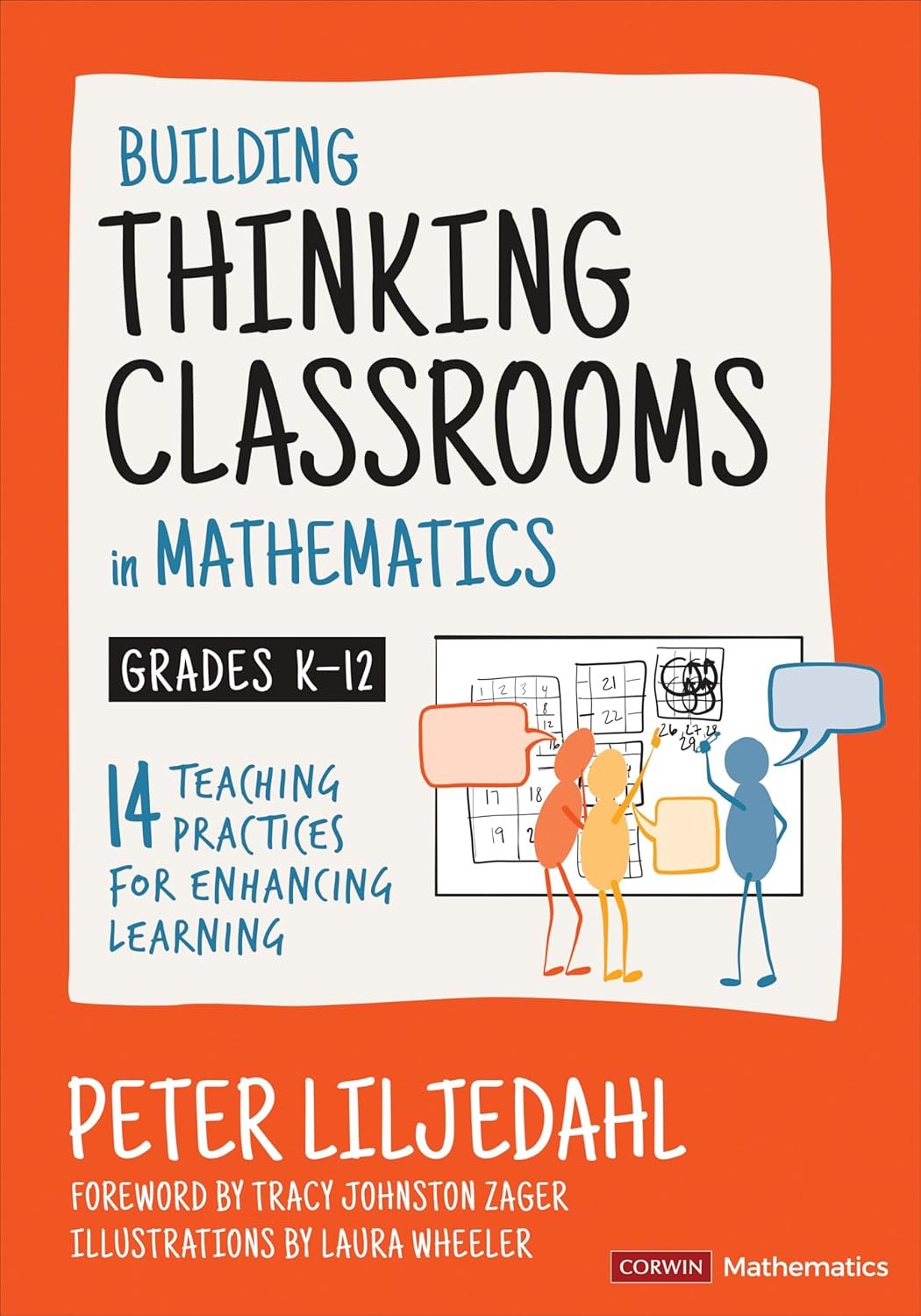
Do you ever wonder why your math students seem disengaged, going through the motions without truly thinking? You're not alone. Many teachers struggle to break free from institutional norms that actually enable "non-thinking" behavior in mathematics classrooms. But what if there was a proven way to transform your classroom into a space where mathematical thinking flourishes naturally?
Traditional math teaching often relies on rote memorization and repetitive calculations, leaving students thinking rather than understanding. This creates passive learners who can follow procedures but can't apply concepts to new situations. The frustration is real—for both teachers and students who know there's more to mathematics than just getting the right answer.
Based on 15 years of extensive research, Peter Liljedahl has identified 14 optimal practices that create what he calls "thinking classrooms." These aren't just theoretical ideas—they're practical, actionable strategies that have been tested and refined in real classrooms. The beauty of this approach is that it works across all grade levels, from kindergarten through high school, adapting to different mathematical content while maintaining the core principles of deep thinking.
This comprehensive guide goes beyond simply listing practices—it provides the complete framework you need. Each practice comes with clear explanations of what it is, why it matters, and exactly how to implement it. You'll discover macro moves for structuring your classroom, micro moves for daily interactions, and rich tasks that genuinely challenge students to think deeply about mathematics. The book is filled with real examples, including teacher interviews, student work samples, and firsthand accounts that show these practices in action.
The 14 practices are organized into four toolkits that can be implemented in sequence, allowing you to build momentum throughout the school year. You don't need to overhaul everything at once—start with one or two practices, see how they work in your context, and gradually add more as you and your students become comfortable with this new way of learning mathematics.
When you combine these practices, you create the optimal conditions for learner-centered, student-owned deep mathematical thinking. The transformation isn't immediate, but the results are profound—students who genuinely engage with mathematics, ask meaningful questions, and develop the thinking skills that serve them far beyond the math classroom.