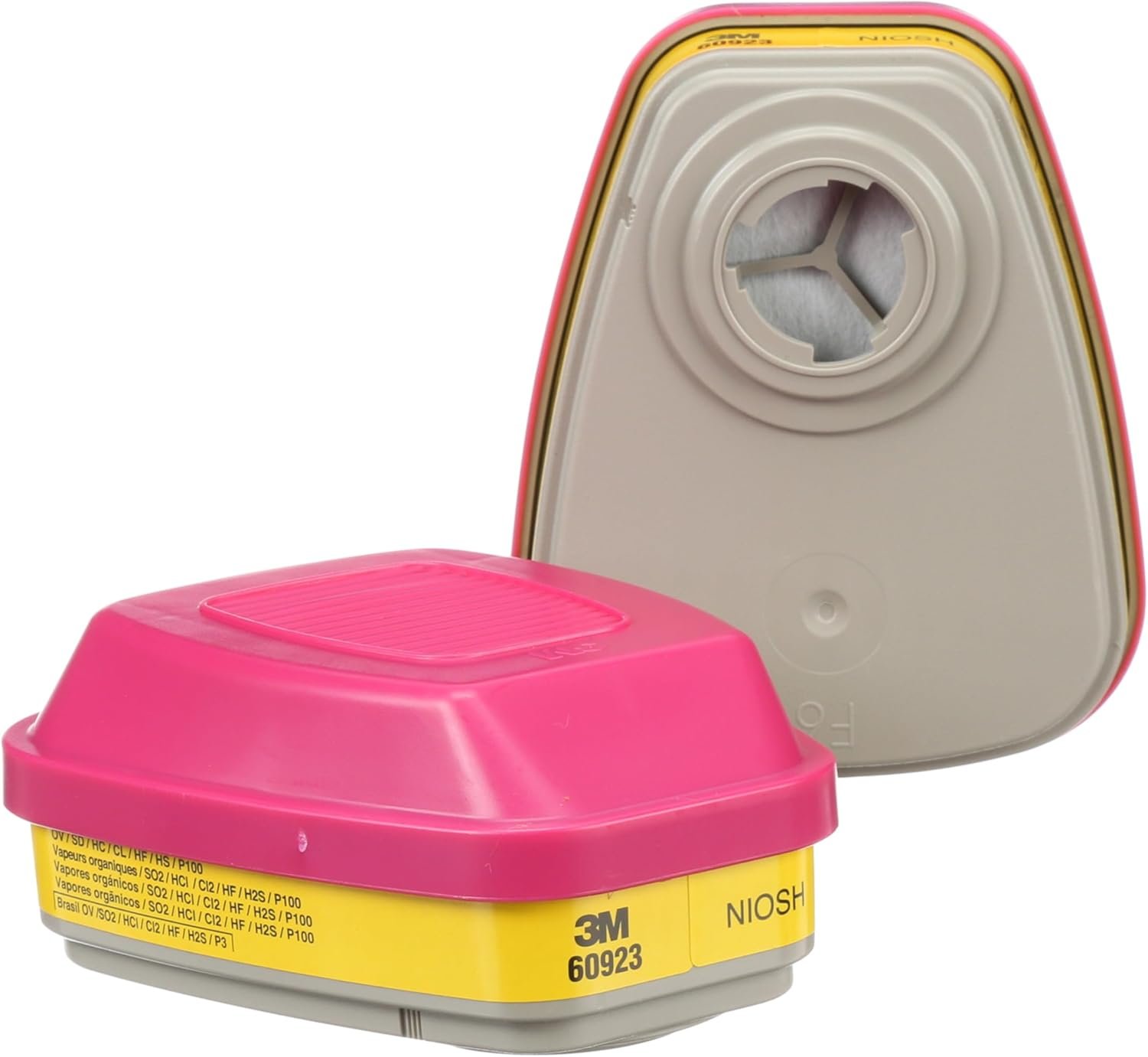
Ever stepped into a workspace filled with that sharp chemical smell and wondered if your current gear is really cutting it? I've been there in labs and workshops, and let me tell you, skimping on respiratory protection isn't worth the risk. That's where the 3M P100 Respirator Cartridge/Filter 60923 comes in—it's a straightforward, no-nonsense solution designed to keep harmful stuff out while you focus on the job.
These cartridges tackle a range of threats: organic vapors like solvents, acid gases such as chlorine or sulfur dioxide, and even particulates that can irritate your lungs. NIOSH approval means they've been rigorously tested to handle environments up to 10 times the Permissible Exposure Limit (PEL) when paired with half facepieces, or 50 times with a full facepiece that's been fit-tested. Picture filtering out hydrogen chloride in a bustling chemical plant or shielding against non-oil and oil-based particles during petrochem work— this combo does it all without needing a separate filter for every scenario.
What makes them practical? They're versatile, swapping easily into 3M Half and Full Facepieces (6000, 7000, FF-400 series) or even 3M Scott AV-3000 models with the right adapter. No more juggling inventory for different applications; one pair simplifies your safety kit for labs, general manufacturing, or pharmaceutical settings.
Slip these magenta and yellow cartridges into your mask, and you're set for shifts where air quality matters most. The swept-back design ensures a wide field of view, so you're not bumping into things while staying protected. In my experience, they're lightweight enough not to fatigue you during long hours, and the secure bayonet connection means no leaks or worries mid-task.
Think about the peace of mind during routine maintenance in a factory or mixing compounds in a research lab—these filters handle hydrogen fluoride or hydrogen sulfide just as well, keeping particulates from clogging your breath. They're not for immediately dangerous situations, of course, but for everyday controlled exposures, they reduce the need for extensive training or multiple stockpiles.
If you're in industries like chemicals or pharmaceuticals, integrating these into your routine means fewer headaches over compliance and more confidence in your setup. Pair them with proper fit testing, and you've got a reliable barrier against the unseen hazards in the air. It's about working smarter, not harder, with gear that actually performs when it counts.