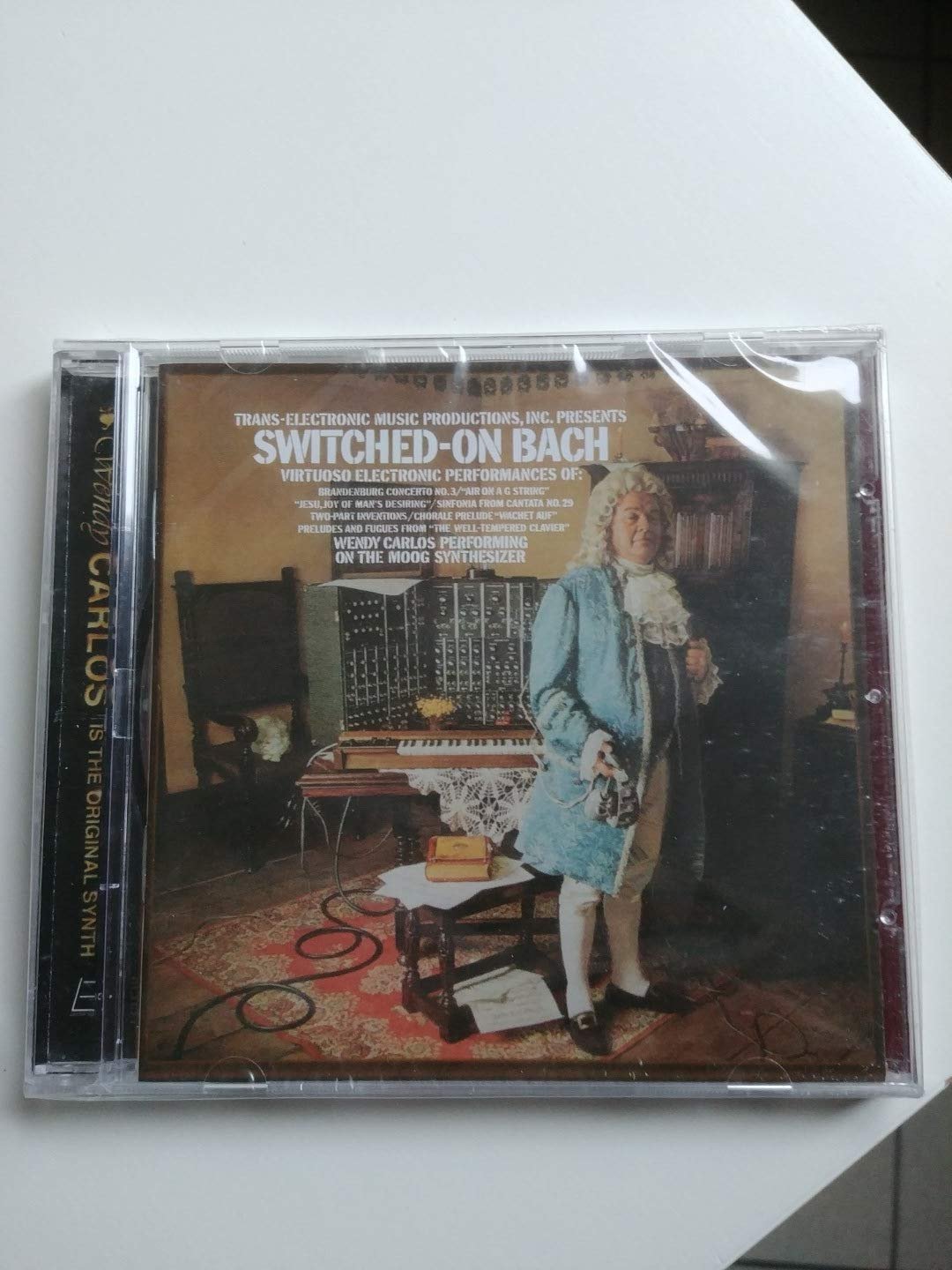
In a world where classical music can sometimes feel distant and formal, Wendy Carlos's Switched-On Bach emerged as a revolutionary bridge between centuries of tradition and the dawn of electronic sound. When this album was released in 1968, it wasn't just a novelty—it was a revelation that demonstrated how Bach's intricate compositions could thrive in entirely new electronic environments.
The genius of this recording lies in how Carlos approached Bach's keyboard masterpieces. Instead of treating them as museum pieces, she recognized that Bach's contrapuntal complexity and mathematical precision made them perfect candidates for electronic interpretation. The Moog synthesizer, with its distinctive blurps, farts, and chimes, becomes an unlikely but perfect vessel for delivering Bach's genius in a completely new way.
What makes Switched-On Bach so remarkable is how it preserves the essential character of Bach's music while transforming its sound entirely. The album includes beloved pieces like "Two-Part Inventions," "Jesu, Joy of Man's Desiring," and "Wachet Auf," yet each track carries an unmistakable electronic identity. The synthesizers may sound vintage by today's standards, but their otherworldly quality has only grown more compelling with time.
Carlos's approach was meticulous and thoughtful. She didn't simply "electronify" Bach—she reimagined how each piece could speak through new sonic textures. The result is an album that surprises and delights with every listen, revealing new details in familiar compositions. This is why it won the Grammy Award for Best Classical Album in 1969 and why it continues to captivate listeners more than half a century later.
Whether you're a classical scholar who can identify every fugal entry or a pop enthusiast who just loves great music, Switched-On Bach offers something special. It serves as both an introduction to Bach's genius and a celebration of electronic music's potential. The album's accessibility is part of its magic—you don't need to understand music theory to appreciate how these pieces work in their new electronic forms.
Listening to this recording feels like discovering a secret conversation between past and present. The mathematical precision of Bach's compositions meets the playful possibilities of early synthesizer technology, creating something that's both intellectually stimulating and emotionally resonant. It's no wonder this album has remained in continuous print since its release—a rare achievement for any recording.
While Carlos would later release a Switched-On box set capturing more of her baroque-gone-berserk output, this original album remains the touchstone. It's the recording that started it all, demonstrating how classical music could thrive in electronic environments and inspiring generations of musicians to explore new sonic possibilities.
Fun, innovative, and endlessly fascinating, Switched-On Bach proves that great music transcends both time and technology. It's not just an electronic album or a classical album—it's a perfect fusion that stands as one of the most creative and influential recordings of the 20th century.