Picture this: you're out under a clear night sky, peering through your telescope at the craters of the moon, and suddenly you want to capture that view to show your buddies later. Or maybe you're on a birdwatching trip, and that rare hawk glides into view through your binoculars—wouldn't it be amazing to snap a photo instantly? That's where the Celestron Universal Smartphone Adapter comes in, turning your everyday phone into a powerful tool for astrophotography and wildlife imaging.
Anyone who's tried holding a phone up to an eyepiece knows the frustration: shaky hands, blurry results, and missed opportunities. Traditional setups often require bulky mounts or tripods that aren't practical for quick shots. This adapter solves that by providing a stable, universal connection that works with nearly any smartphone and a variety of optical devices, from telescopes and spotting scopes to binoculars and even microscopes.
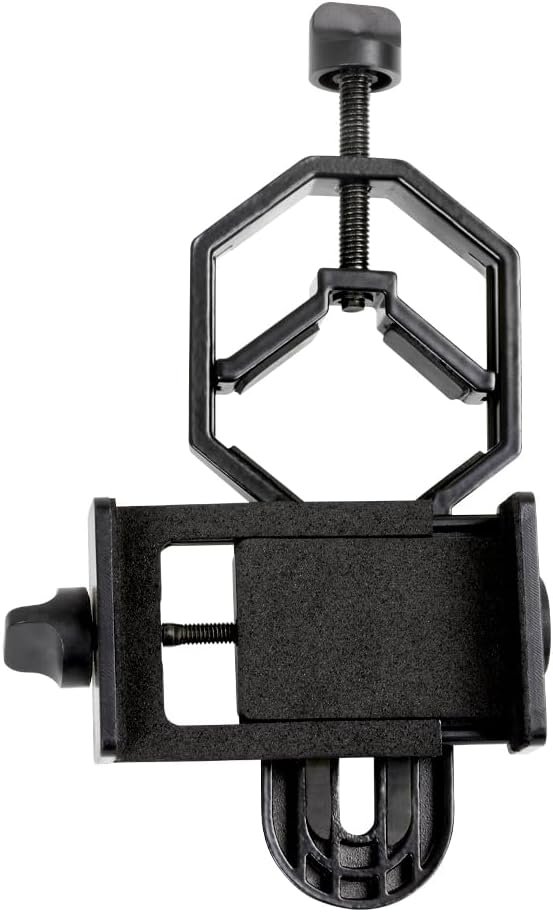
Attaching the adapter is straightforward. First, tighten the eyepiece clamp around your optic's barrel—it's designed to grip securely on diameters between 29mm and 45mm, covering most standard 1.25-inch telescope eyepieces. Then, slide your phone into the adjustable phone clamp, which holds devices up to common sizes without scratching. Use the handy alignment knob to center your camera over the eyepiece perfectly, ensuring every detail comes through crystal clear. And for versatility, you can rotate the whole unit 90 degrees to switch between portrait and landscape orientations on the fly.
Built from durable metal, it's tough enough for regular use but weighs next to nothing, making it easy to toss in your backpack for spontaneous adventures. No more wrestling with unstable holds; just quick, reliable attachment that lets you focus on the view.
The real magic happens in the images you capture. Through a telescope, you'll document planetary rings or star clusters with ease, preserving those awe-inspiring sights. With binoculars, wildlife enthusiasts can photograph animals in their natural habitat without disturbing them. Even under a microscope, it helps record intricate details of specimens for educational purposes or personal curiosity. The adapter enhances your observational experience by bridging the gap between eye and lens, so you can relive and share discoveries long after the moment passes.
It's especially handy for group outings like star parties, where everyone wants their own digital memento, or family nature walks, turning passive viewing into active participation. Beginners appreciate the no-fuss design that doesn't require advanced skills, while seasoned observers value the precision it adds to their toolkit.
Think about using it on camping trips to photograph constellations, or during urban stargazing sessions from your balcony. Birders will find it indispensable for logging rare sightings with visual proof. In a classroom or home lab, students can capture slides under the microscope to include in reports. Its portability means it's always ready, whether you're traveling light or setting up for a longer session.
At the end of the day, this adapter isn't just about taking pictures—it's about connecting deeper with the world around you, one frame at a time. If you're passionate about astronomy, nature, or science, it's a small addition that unlocks big possibilities.