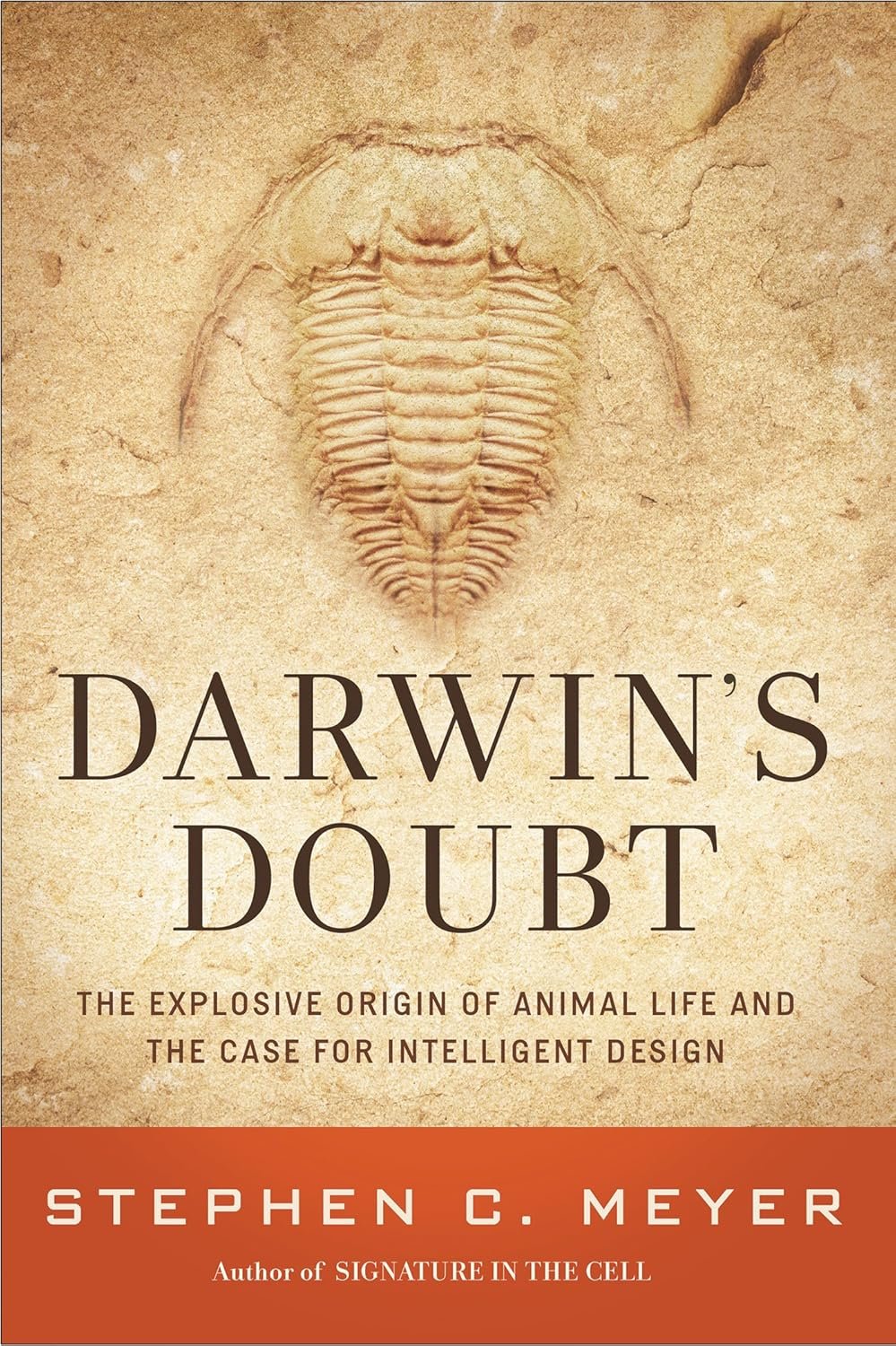
In "Darwin's Doubt", Stephen C. Meyer delves into one of the most intriguing events in the history of life: the Cambrian explosion. While the famous naturalist Charles Darwin believed he had explained the origin of life in his seminal work, there remained a significant unanswered question—the sudden appearance of diverse animal forms in the fossil record during the Cambrian period.
This event, marked by a rapid proliferation of life, poses profound challenges to traditional evolutionary explanations. It raises critical questions: Why did these animal forms emerge so abruptly, and where are the expected precursors or ancestors? Meyer explores these questions in depth, revealing that as our understanding of biology has advanced, so too has our realization of the complexity involved in constructing the forms of life we observe today.
The author emphasizes the central role of biological information carried within DNA and cellular structures—information that is crucial for building intricate animal forms. The insights gained over the past decades suggest that random mutations and natural selection might not be solely responsible for the diversity of life.
Expanding upon his previous work, "Signature in the Cell", Meyer presents an articulate argument for intelligent design as the most plausible explanation for the origin of this complex biological information, contrasting it with the theory of purely undirected evolutionary processes. He invites readers to reconsider the implications of the Cambrian explosion for understanding the history of life on Earth and the possibility of a purposeful designer.
"Darwin's Doubt" is not just a book for those interested in evolution and biology; it is a profound exploration of life's origins and the questions that remain unanswered, challenging readers to engage with one of the biggest mysteries in science today.