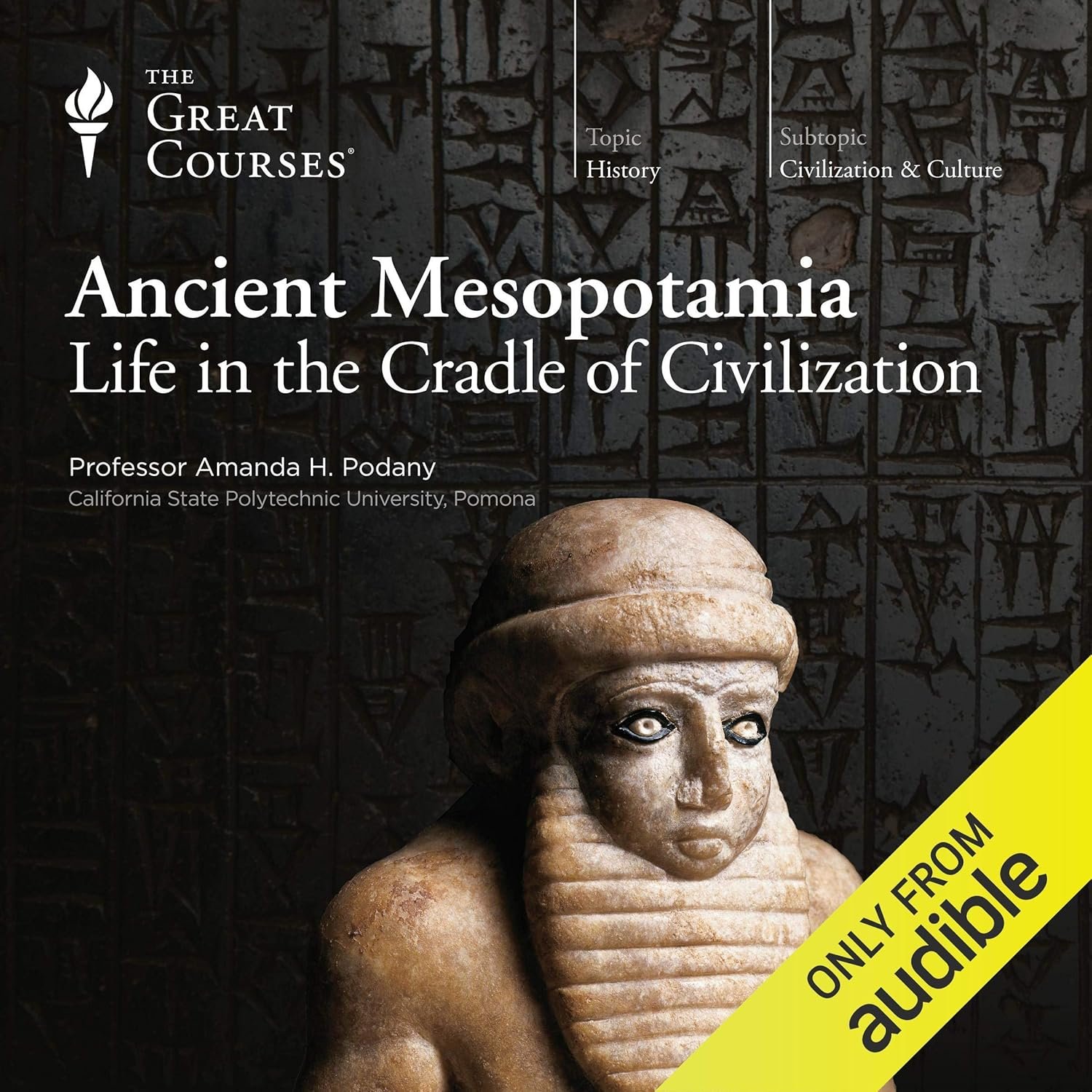
Have you ever wondered what life was really like thousands of years ago? When we picture ancient civilizations, many of us imagine simple mud huts and basic farming communities. But what if you discovered that 5,000 years ago, people were already living in remarkably sophisticated cities with advanced technology?
Mesopotamia, the ancient name for what we now call Iraq, was home to a civilization that flourished for two-thirds of recorded human history. For centuries, the rich achievements of these people remained hidden, their stories preserved only in mysterious cuneiform scripts. Less than 200 years ago, when scholars finally deciphered their writing, a whole new world opened up—one of towering stepped temples, palaces with actual bathrooms and plumbing, and complex urban societies that would rival many modern cities.
Through Professor Podany's engaging 24-lecture course, you'll meet the remarkable people who called Mesopotamia home. You'll discover how they mastered irrigation agriculture to transform the fertile lands between the Tigris and Euphrates rivers, how they developed writing systems that would influence all future literature, and how they created laws and governance structures that laid foundations for modern society. These weren't just primitive villagers—they were innovators, builders, thinkers, and dreamers who shaped the course of human history.
Unlike the well-documented histories of Greece and Rome, Mesopotamian stories have only recently come to light. This course brings them vividly to life through tales of powerful kings and priestesses, ordinary merchants and farmers, and the everyday triumphs and struggles of people living in the world's first urban centers. You'll hear about their art, their science, their literature, and their daily lives—giving you unprecedented insight into the birthplace of civilization itself.
Whether you're a history enthusiast or simply curious about our shared human heritage, this journey through Mesopotamia will forever change how you think about the past and our collective human story.