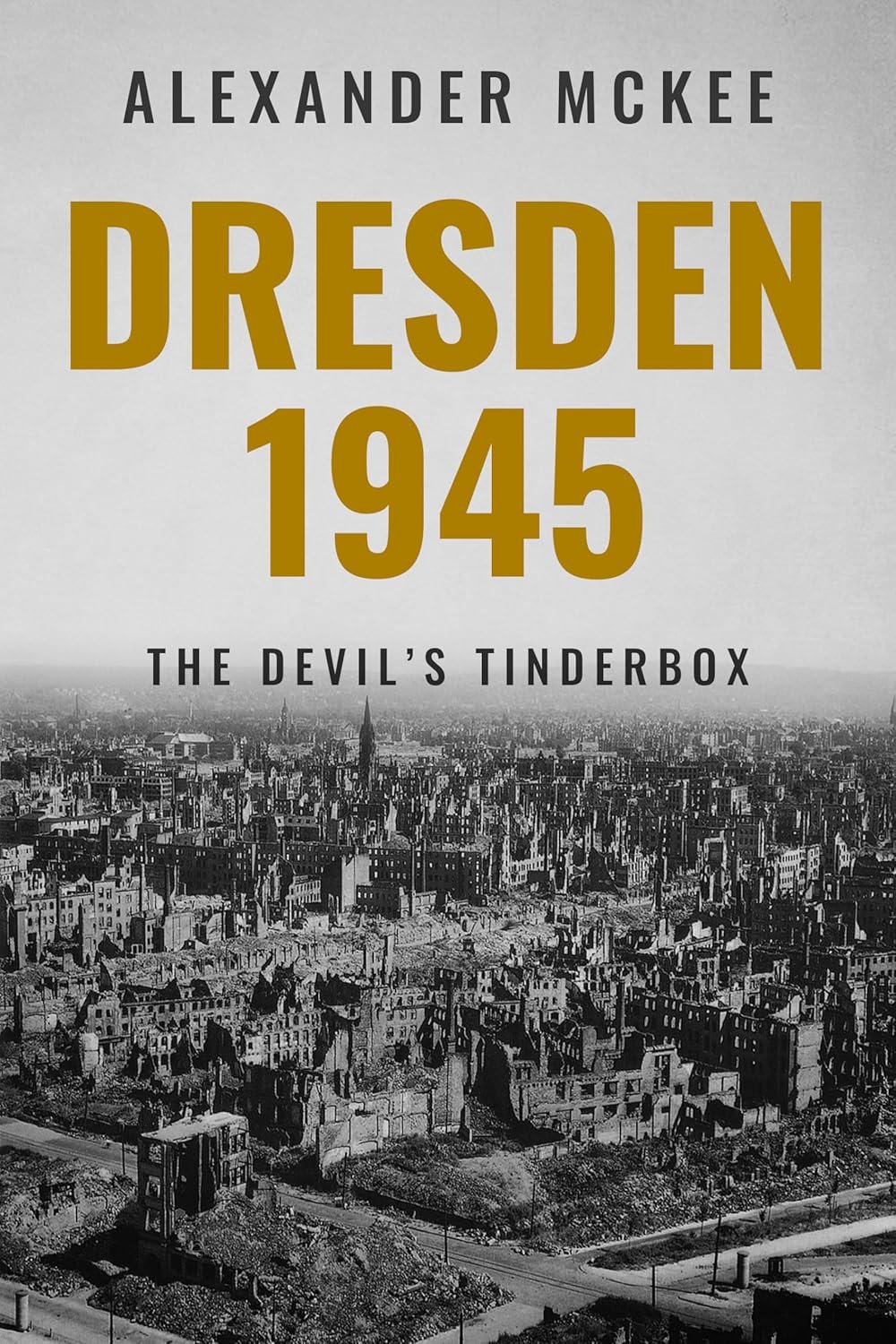
Before the night of February 13, 1945, Dresden was known throughout Europe as a breathtaking cultural treasure—a city filled with architectural masterpieces and artistic heritage. Yet in three days, this beautiful city was transformed into a fiery hell when 1,300 British and American aircraft unleashed 5,000 tons of incendiary and high-explosive bombs upon its undefended streets.
What makes Dresden's story particularly haunting is the staggering human toll. While official records suggest between 35,000 to 45,000 deaths, historians widely believe the actual number was far higher, encompassing women, children, refugees, and prisoners of war who had sought shelter in the city. This wasn't just a military target—it was a humanitarian catastrophe that raises profound questions about the ethics of total war.
Alexander McKee brings extraordinary credibility to this account, having witnessed the devastating effects of Allied bombing firsthand during his service with the 1st Canadian Army. Haunted by what he saw in Caen, Lisieux, Emmerich, and Arnhem, McKee embarked on a meticulous investigation that included interviewing Dresden survivors and the Allied airmen who participated in the raids.
This book transcends typical historical accounts by weaving together official military records with personal stories that capture the terror and confusion of those three terrible nights. You'll read the perspectives of mothers protecting their children, doctors struggling to save lives amid the rubble, and young airmen grappling with the moral weight of their missions.
For anyone who has been moved by Kurt Vonnegut's Slaughterhouse-Five, this book provides the historical context that gives that fictional account its profound power. McKee's "rigorously fair-minded" examination (as noted by The Irish Times) doesn't take easy moral positions but instead forces readers to confront uncomfortable questions about how even democratic societies can commit atrocities in the heat of war.
Whether you're a WWII history enthusiast, a student of military ethics, or simply someone seeking to understand the full human cost of conflict, Dresden, 1945 offers an unflinching look at one of history's most controversial bombing campaigns. It's a story that will stay with you long after you turn the final page.