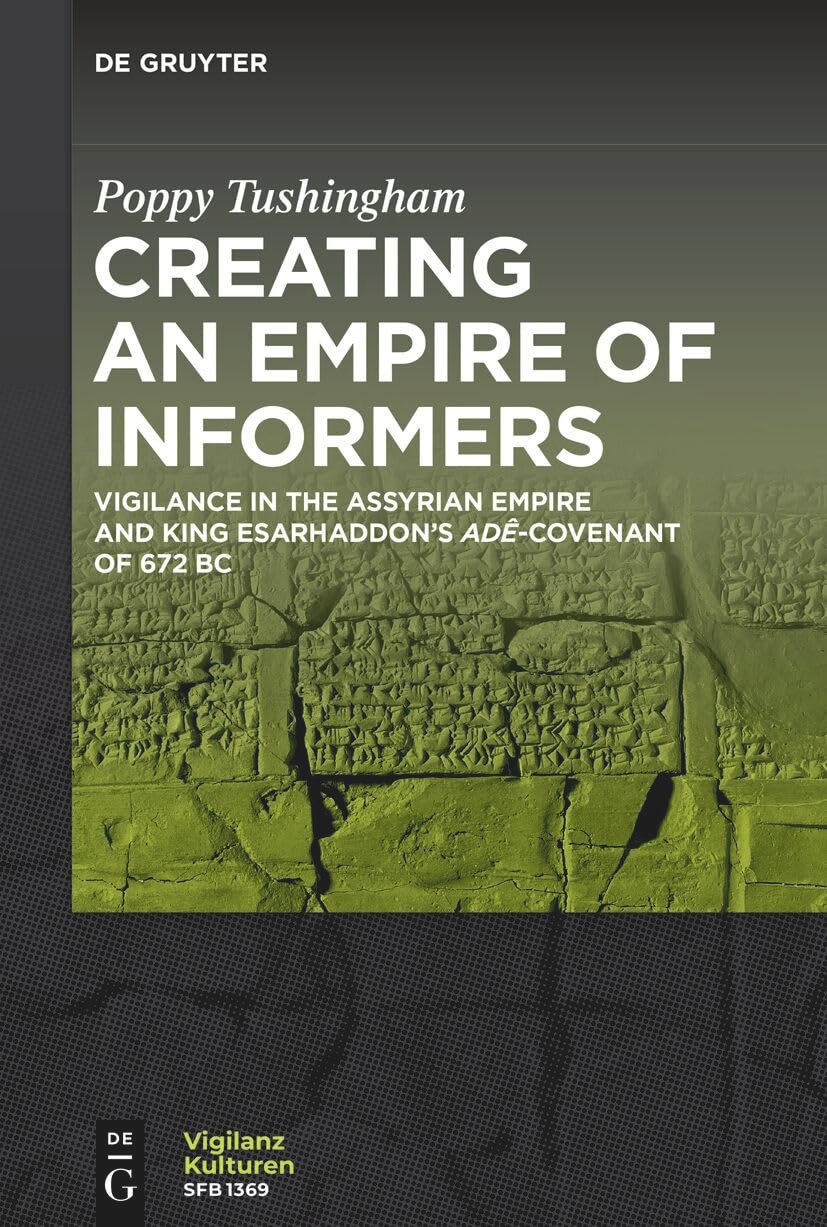
Throughout history, powerful states have always sought ways to control their populations, but few have implemented systems as comprehensive as the Assyrian Empire in 672 BC. This fascinating historical study reveals how King Esarhaddon created one of the earliest known mass surveillance systems, requiring his subjects to monitor each other for signs of disloyalty.
In 672 BC, Esarhaddon imposed a radical covenant known as the adê on his empire's population. This unprecedented decree mandated that Assyrians become informers, reporting on their neighbors, family members, and even themselves for any perceived threats to the monarchy and its chosen heir, Ashurbanipal. The covenant wasn't just theoretical—it fundamentally changed how people lived, worked, and interacted with one another in ancient Mesopotamia.
Drawing on an impressive array of historical sources, including royal decrees, private letters, legal documents, and even biblical references, this book provides a comprehensive analysis of the covenant's implementation. The author examines how the Assyrian state presented this duty of vigilance to its citizens and explores the unintended consequences that arose when ordinary people were transformed into instruments of state control.
What makes this study particularly compelling is its exploration of surveillance systems that echo through history. By examining how a ancient empire managed mass monitoring through its own population, readers gain valuable insights into the psychological and social mechanisms that enable surveillance societies. The book doesn't just present historical facts—it invites readers to consider how these ancient systems might inform our understanding of modern surveillance technologies and privacy concerns.
Whether you're a student of history, political science, or simply interested in the origins of state control, this book offers a compelling narrative that bridges ancient and modern concerns about power, privacy, and the delicate balance between security and freedom.