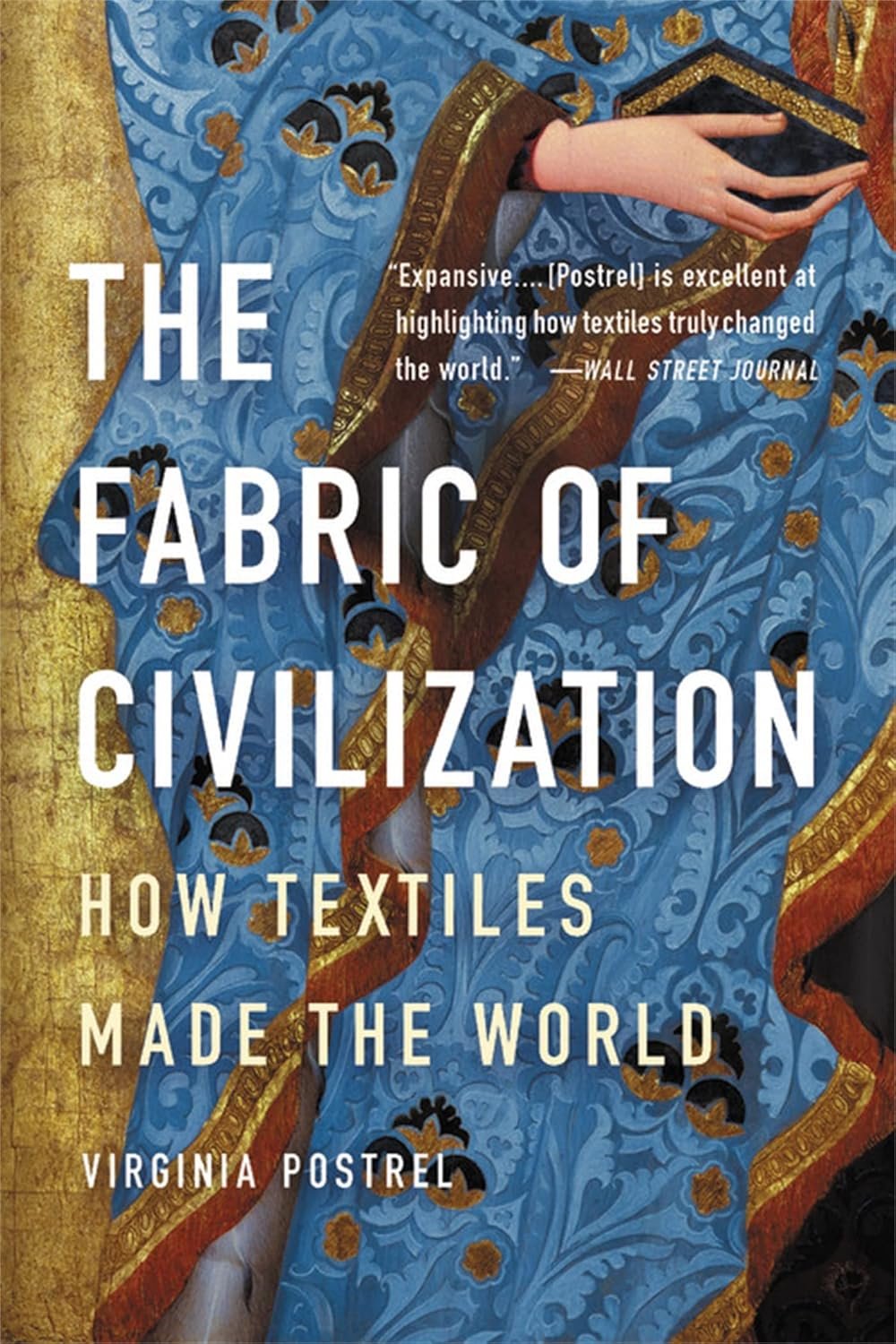
Picture this: without textiles, no Silk Road bustling with merchants, no Renaissance bursting with genius, no Taj Mahal gleaming in marble splendor. Sounds wild? That's the epic scope of The Fabric of Civilization by Virginia Postrel, a paperback that dives deep into how cloth has quietly steered humanity's course since the first fibers were spun.
We've all worn clothes or draped a towel, but few realize textiles drove tech breakthroughs, shaped economies, and ignited wars. Postrel pulls from archaeology digs uncovering purple-dyed Minoan wool shipped to Egypt, Roman elites flaunting Chinese silk, and Renaissance bankers rising on cloth profits. It's not dry history—it's a vivid narrative showing fabrics as the original global commodity.
The book traces how textile trade spread alphabets across continents, funded the Mughal Empire's opulence, and propelled chemical dyes that birthed entire industries. You'll read about how weaving techniques taught binary thinking centuries before computers, and how cloth merchants invented double-entry bookkeeping— the backbone of today's finance. Sensory details pop: the sheen of costly silks, the labor of hand-spinning, the vibrant hues from rare murex snails.
It's meticulously researched yet reads like a conversation with a passionate friend who's obsessed with history's quirks. Perfect for curling up on a rainy afternoon or gifting to someone who geeks out over "what if" questions about everyday stuff. History lovers, economists, even makers and designers will find fresh insights—did you know textiles kickstarted systematic science?
At around 400 pages of dense yet delightful prose, this 2021 release (praised by The New York Times as "carefully woven") answers why textiles matter now more than ever. Whether you're pondering your own wardrobe's backstory or seeking a smarter take on innovation, The Fabric of Civilization delivers. snag it for your shelf and watch history unravel in the best way.