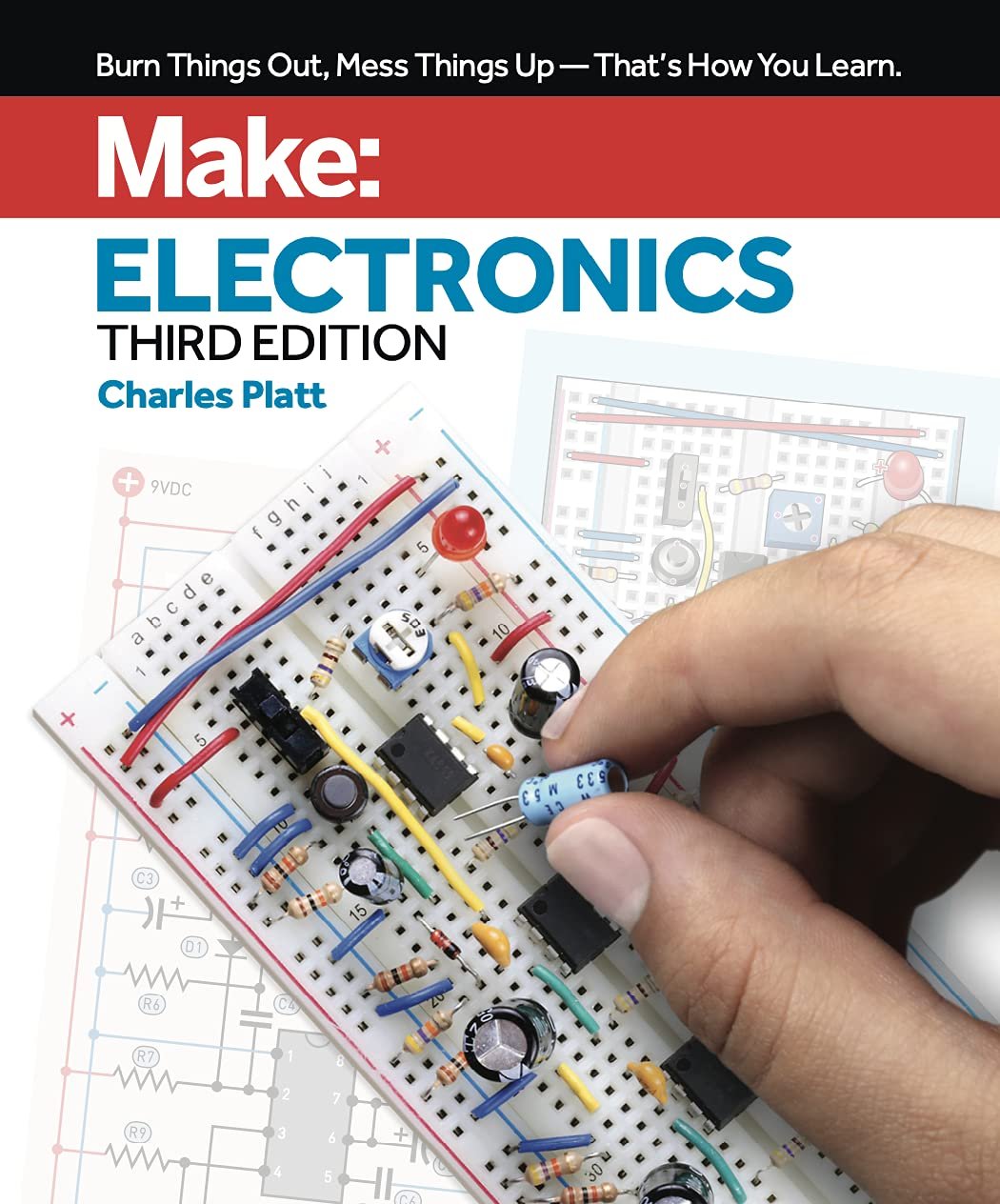
Imagine picking up a book that doesn't just tell you about electronics but lets you experience it—fingers deep in wires, lights flickering to life under your control. That's the magic of the third edition of Make: Electronics. Written by Charles Platt, it's designed for anyone starting from scratch, assuming you know absolutely nothing about circuits or components. From kids as young as 8 to adults up to 84, readers rave about how it turns confusion into confidence.
Most electronics books pile on formulas and abstract concepts that leave you lost before you even start. You might understand Ohm's Law in theory, but without touching it, it slips away. This book flips the script: instead of memorizing, you learn by discovery. You'll build simple circuits with everyday parts, like LEDs that overload and fuses that blow, showing real limits in action. No prior knowledge required—just curiosity and maybe a basic toolkit like pliers or a cheap multimeter.
Dive into experiments that reveal core ideas: how transistors switch current with a simple 'finger test,' or using capacitors to time events. The full-color illustrations guide you every step, from wiring a reflex tester to crafting a button-pressing game. Want to peek inside? Cut open a relay to see its guts. Soldering is optional; many projects snap together easily. Plus, a buying guide points you to affordable kits on Amazon or online shops, keeping costs low.
Here's the best part: errors aren't failures—they're teachers. Burn out a component and watch what happens; it cements lessons on voltage, amperage, and more. You'll grasp inductance and magnetism not from dry text, but by seeing sparks fly (safely). These tangible moments make abstract topics like time constants feel intuitive. It's electronics education that feels like play, building skills for hobbies, school projects, or even future tinkering with Arduino.
Picture assembling a combination lock for your computer or competing in a quick-reaction game with friends. Parents love it for engaging young minds in STEM without screens dominating playtime. Hobbyists use it to refresh basics before bigger builds. By the end, you'll not only understand electronics primer concepts but crave more—turning 'I can't' into 'Watch this!' If you're ready to light up your learning, this book's your starting wire.