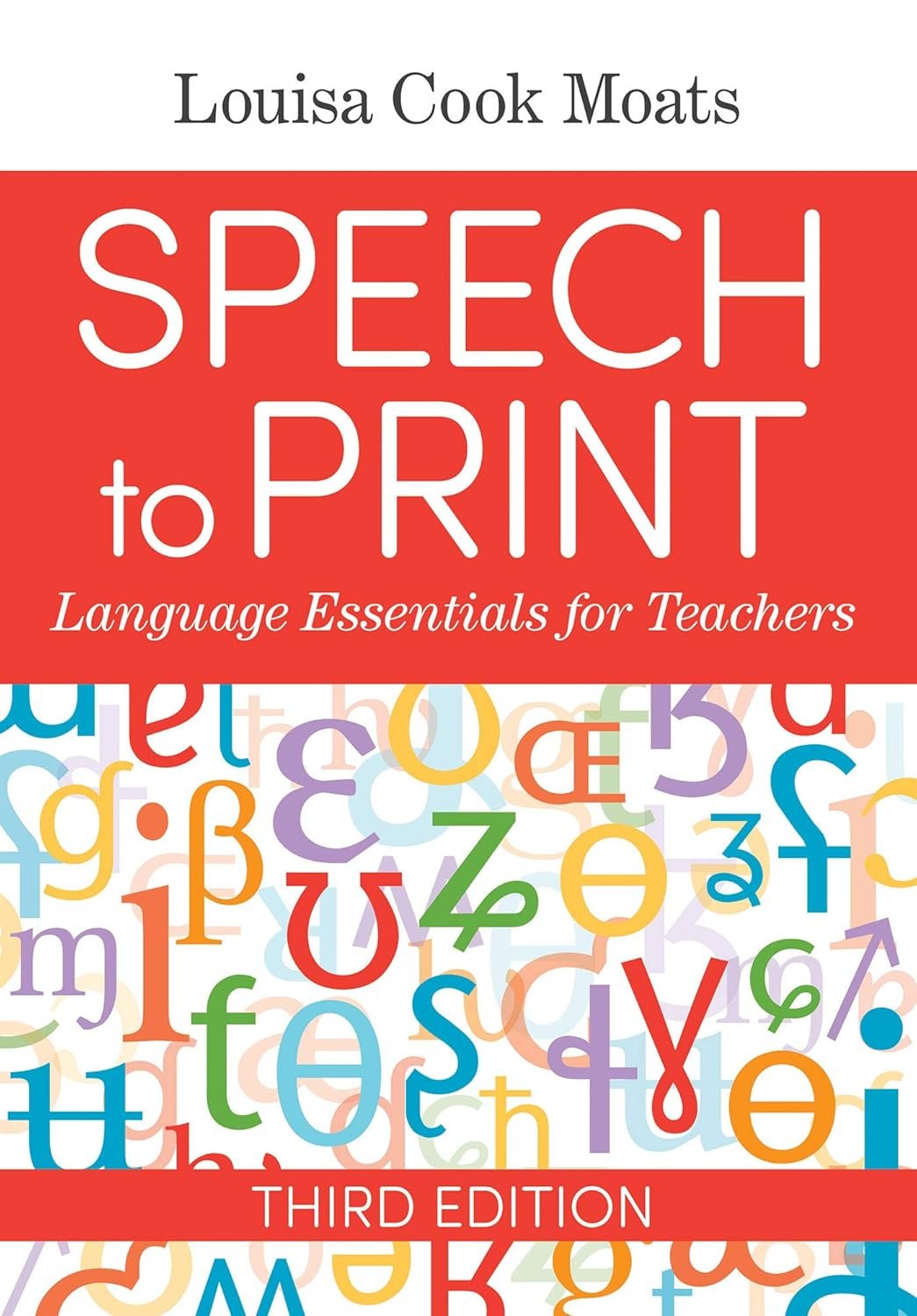
As a teacher, you know that effective literacy instruction requires more than just following a curriculum—it demands a deep understanding of how language actually works. For two decades, Speech to Print has been the essential resource that bridges the gap between linguistic theory and classroom practice, helping educators transform their approach to teaching reading and writing skills.
Language isn't just something we use—it's a complex system with rules and structures that directly impact how students learn to read. This comprehensive textbook demystifies the English language, taking you on a journey through its historical development, phonological patterns, morphological complexities, and syntactic frameworks. You'll discover why certain spellings make sense, how speech sounds translate to print, and why some students struggle with specific aspects of language—all through the lens of current research and practical application.
What sets this 3rd edition apart is its focus on the "how" of instruction. You'll find concrete strategies for assessing students' language needs, planning effective lessons, and troubleshooting when interventions don't work as expected. The updated case studies and student work samples provide real-world context, while the new exercises help you immediately apply what you've learned in your own classroom.
This edition comes with a full package of supporting materials designed to make your teaching more effective. Access chapter quizzes, sample syllabi, PowerPoint presentations, and even video demonstrations of English sound production. Whether you're preparing for your first teaching position or seeking to deepen your professional knowledge, this textbook provides the comprehensive foundation you need to help all students become confident readers and writers.