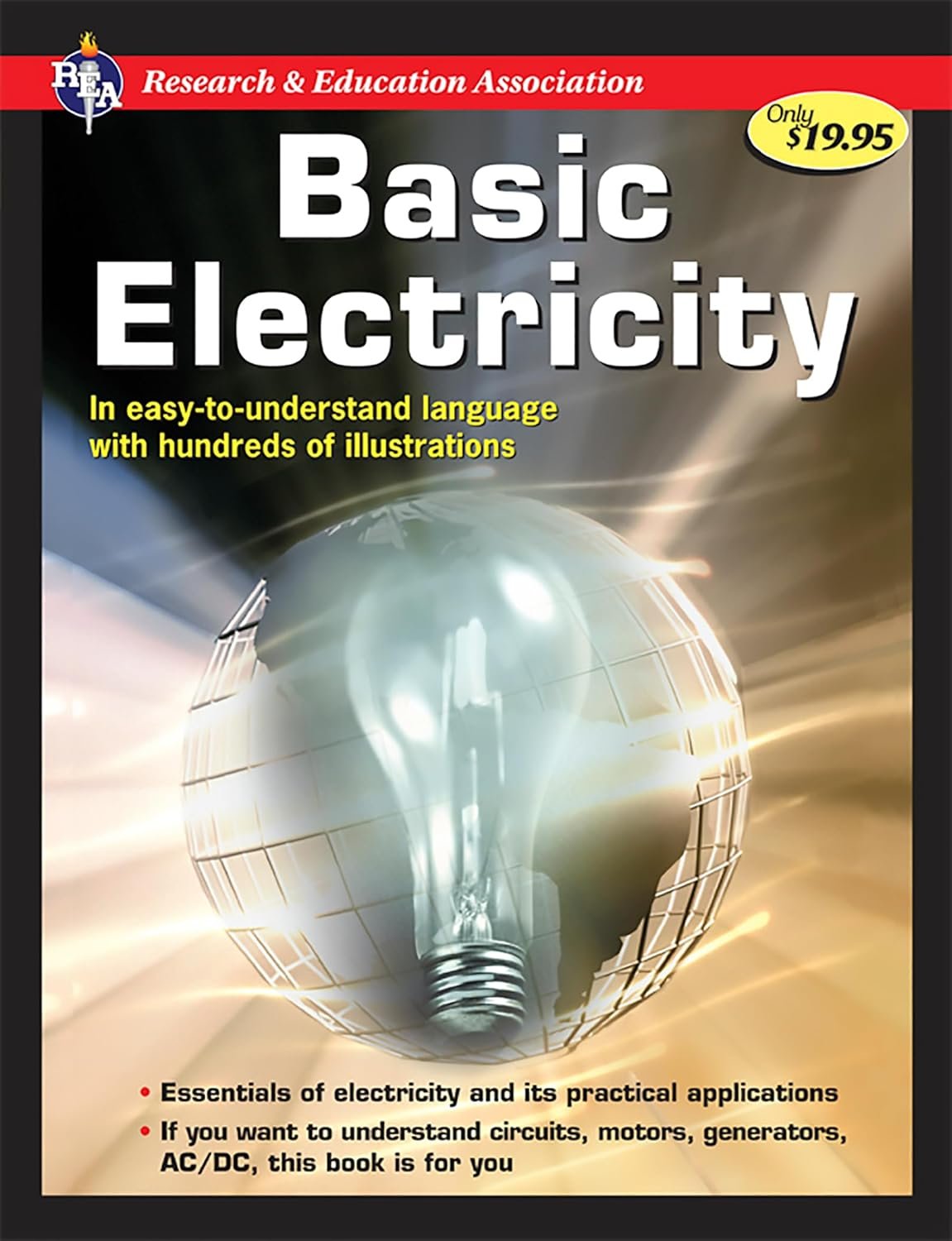
Ever stared at a tangled mess of wires and felt completely lost? If you're dipping your toes into DIY home repairs or gearing up for an electrical course, Basic Electricity is the no-nonsense guide that turns confusion into clarity. This classic manual, originally crafted for U.S. naval personnel, strips away the jargon and delivers straightforward explanations of electrical principles you'll actually use.
Electricity can seem mysterious at first—how does current flow, and why does it matter for your home projects? This book starts from the ground up, covering the core ideas behind direct-current (DC) and alternating-current (AC) devices and circuits. You'll learn about magnetism's role in everything from simple switches to complex systems, plus how motors and generators power our world. It's not just theory; it's practical knowledge that answers questions like, "Why does this circuit keep tripping?" or "How do I safely wire a basic outlet?"
What sets this manual apart is its clear, methodical approach. Each chapter builds on the last, with thorough explanations that feel like a patient instructor walking you through the process. Dozens of detailed figures illustrate concepts, making it easier to visualize electron flow or magnetic fields than reading dry textbooks. Whether you're an aspiring electrician preparing for licensing or a homeowner wanting to understand your fuse box better, these illustrations help concepts stick.
The benefits go beyond the page: gain the confidence to diagnose simple issues yourself, saving time and money on professional calls. It refreshes rusty skills for pros or introduces newcomers to safe practices, reducing risks like shocks or shorts. Imagine troubleshooting that flickering light in the garage without calling an expert— this guide equips you for that exact moment.
Picture this: you're renovating your kitchen and need to run new wiring, or you're helping a friend with a model train setup that involves basic motors. Basic Electricity shines in these scenarios, offering insights into generators for backup power systems or circuit designs for hobby electronics. It's especially handy for trade school students or military trainees, but hobbyists and curious homeowners will find it indispensable too. Keep it on your workshop shelf as a quick reference—flip to the section on inductance when you're puzzled by a transformer, or review Ohm's law before scaling up a project.
In a world where smart homes and EVs are everywhere, understanding electricity basics isn't optional; it's empowering. This timeless resource, with its proven naval pedigree, ensures you're never caught off guard by everyday electrical wonders. Grab it, dive in, and watch how it illuminates your path to hands-on mastery.