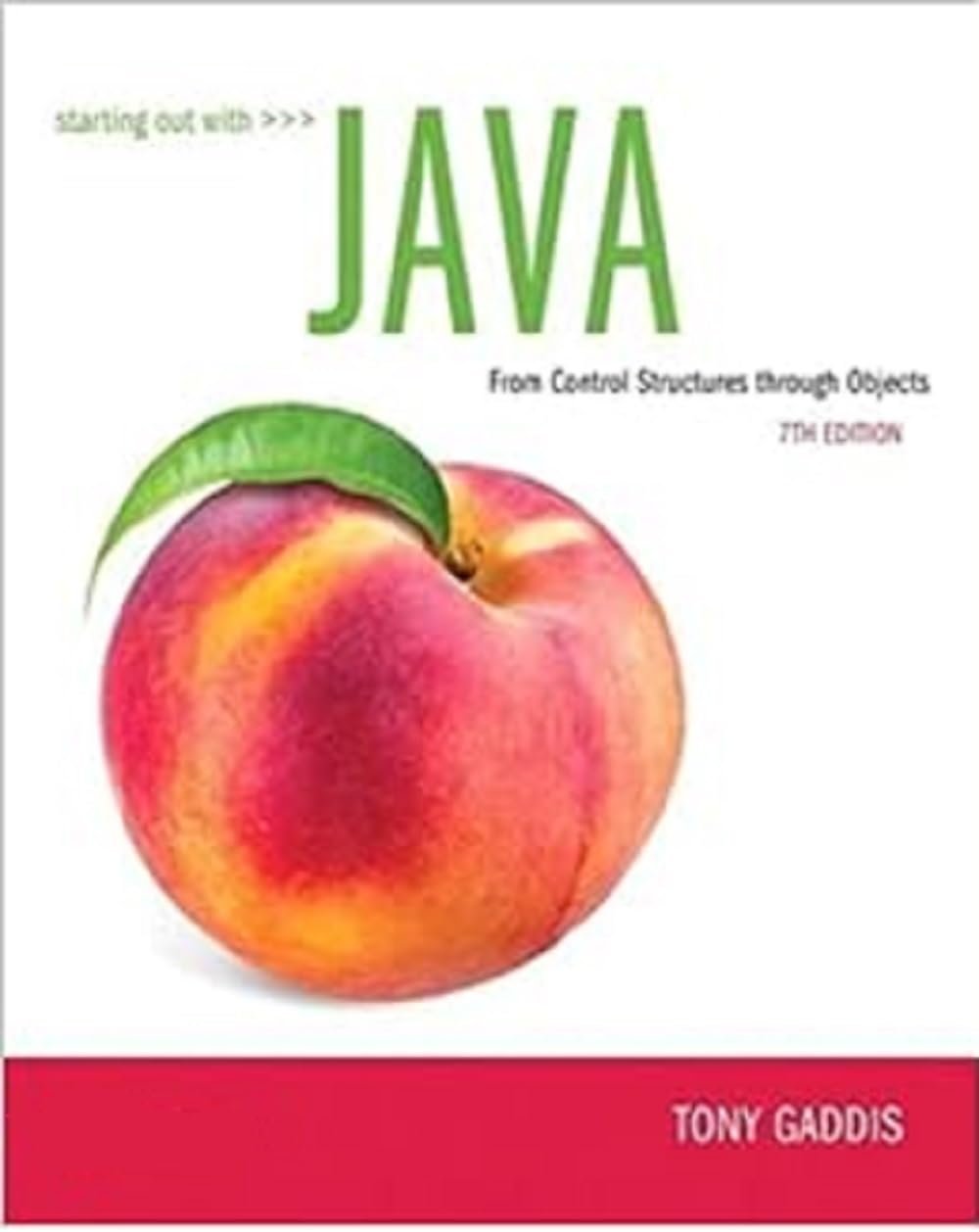
Ever felt overwhelmed by the idea of learning to code? That's where Starting Out with Java comes in, offering a gentle yet thorough introduction to programming that builds your confidence from the ground up.
Programming can seem like a maze at first, especially with Java's reputation for power but complexity. This book breaks it down simply: it starts with procedural programming fundamentals like control structures and methods, ensuring you grasp core problem-solving before tackling object-oriented concepts. Each chapter is packed with clean code snippets that are easy to read and understand, avoiding the jargon overload that scares off newbies.
What sets this apart is the real-world examples—think practical applications like simple apps or data handlers that show why you'd use these techniques. There are abundant exercises at the end of sections, from quick quizzes to hands-on projects, helping you apply what you've learned immediately. With the seventh edition, it updates to JavaFX for GUI development, which feels modern and relevant without complicating things. If you're into Swing or Applets from older versions, those resources are available online too.
Imagine finally understanding how to structure code that solves actual problems, like sorting lists or building basic interfaces. This isn't just theory; it's designed to improve your logical thinking and debugging skills, which carry over to any language. Students often tell me it demystifies Java, turning "I can't code" into "I just built my first program." Plus, it's Kindle-friendly, so you can highlight notes and jump between concepts seamlessly on your device.
Enrolled in an intro computer science course? This aligns perfectly with syllabi for PC programming in Java. Self-teaching for a career switch? Use it alongside online platforms for interactive practice. Even if you're brushing up on basics for a job, the step-by-step approach refreshes without boredom. Pair it with MyLab Programming for auto-graded exercises that provide instant feedback—though that's a separate purchase.
In the end, this book isn't about memorizing syntax; it's about gaining the tools to create and innovate. Grab it, start coding, and watch your programming world expand.