Picture this: you're staring at a stack of cases, statutes blurring together, and your brief is due tomorrow. Sound familiar? That's the reality for so many first-year law students grappling with legal analysis—the bedrock of everything from memos to oral arguments.
Legal analysis isn't just reading the law; it's dissecting it, applying it, and making it sing for your client's story. Without a solid framework, it's easy to miss key connections or wander into irrelevance. That's where most textbooks fall short—they throw rules at you without showing how to wield them effectively.
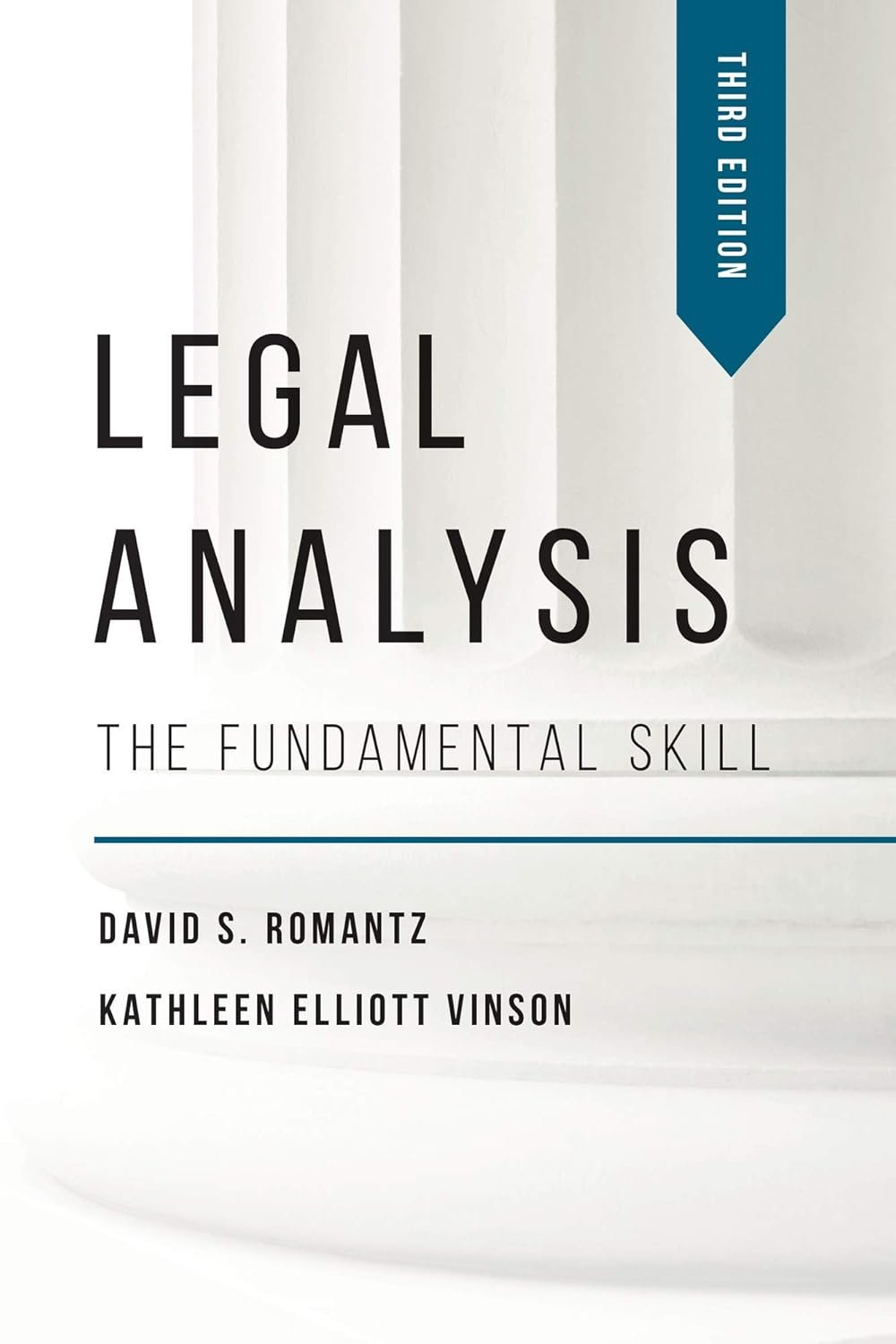
This third edition of Legal Analysis: The Fundamental Skill demystifies the process with the CREAC paradigm (Conclusion-Rule-Explanation-Application-Conclusion). It starts with the basics you know, then layers on advanced techniques for briefs, memos, and beyond. Fresh examples from real-world cases illustrate every step, while targeted exercises let you practice spotting issues and building airtight arguments.
What sets this Kindle edition apart? It's not dry theory—it's hands-on guidance that builds muscle memory for critical thinking. Students report nailing exams, impressing professors, and even shining in summer clerkships. The clear prose and logical flow make dense topics approachable, turning confusion into clarity.
Grab it for doctrinal classes like Contracts or Torts, where IRAC feels too rigid. Use it during exam season to structure practice hypos, or reference it in legal writing seminars. Even practicing attorneys refresh their skills here. At under 500 pages, it's concise yet comprehensive—ideal for your digital library.
Ready to think like a lawyer, not just read like one? This book equips you with the tools to analyze law with precision and persuasion. Download the Kindle version today and watch your grades (and confidence) soar.