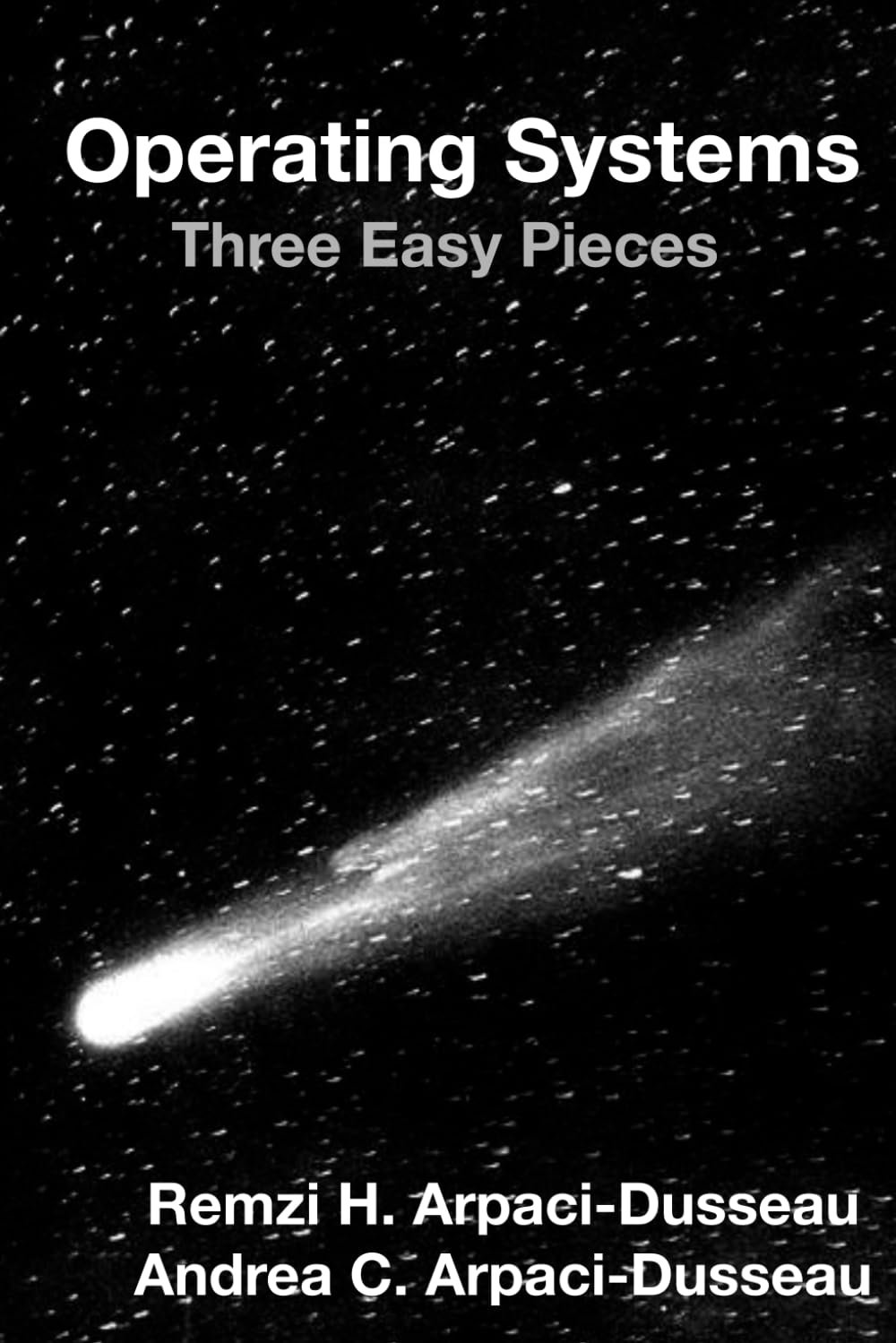
Operating Systems: Three Easy Pieces, affectionately known as "the comet book," represents the culmination of nearly 25 years of teaching operating systems to undergraduate and graduate students at the University of Wisconsin-Madison. What began as lecture notes has evolved into one of the most respected resources for understanding how modern operating systems actually work.
Instead of overwhelming you with endless details, this book breaks down the complex world of operating systems into three fundamental concepts that form the foundation of all OS construction: virtualization (of CPU and memory), concurrency (locks and condition variables), and persistence (disks, RAIDs, and file systems). This approach makes abstract concepts tangible and helps you see the big picture before diving into implementation details.
The authors, Remzi and Andrea Arpaci-Dusseau, aren't just academics—they're pioneers in computer systems research with 30 years of experience. Their work has directly influenced Linux and BSD operating systems, earning them numerous best-paper awards, a test-of-time award, and recognition as ACM Fellows. They've dedicated their careers to making complex systems concepts accessible, and this book reflects that passion.
This isn't just a book you read—it's a resource you work with. When combined with the suggested projects and homework assignments, it transforms from a textbook into a practical guide that builds real understanding. You'll develop the deep appreciation for modern operating systems that comes from understanding not just what they do, but how they do it and why those decisions matter.
Whether you're preparing for exams, working on system projects, or just curious about how your computer really works, this book provides the clarity and depth you need. The three-piece framework gives you mental models that will serve you throughout your career in computer science.