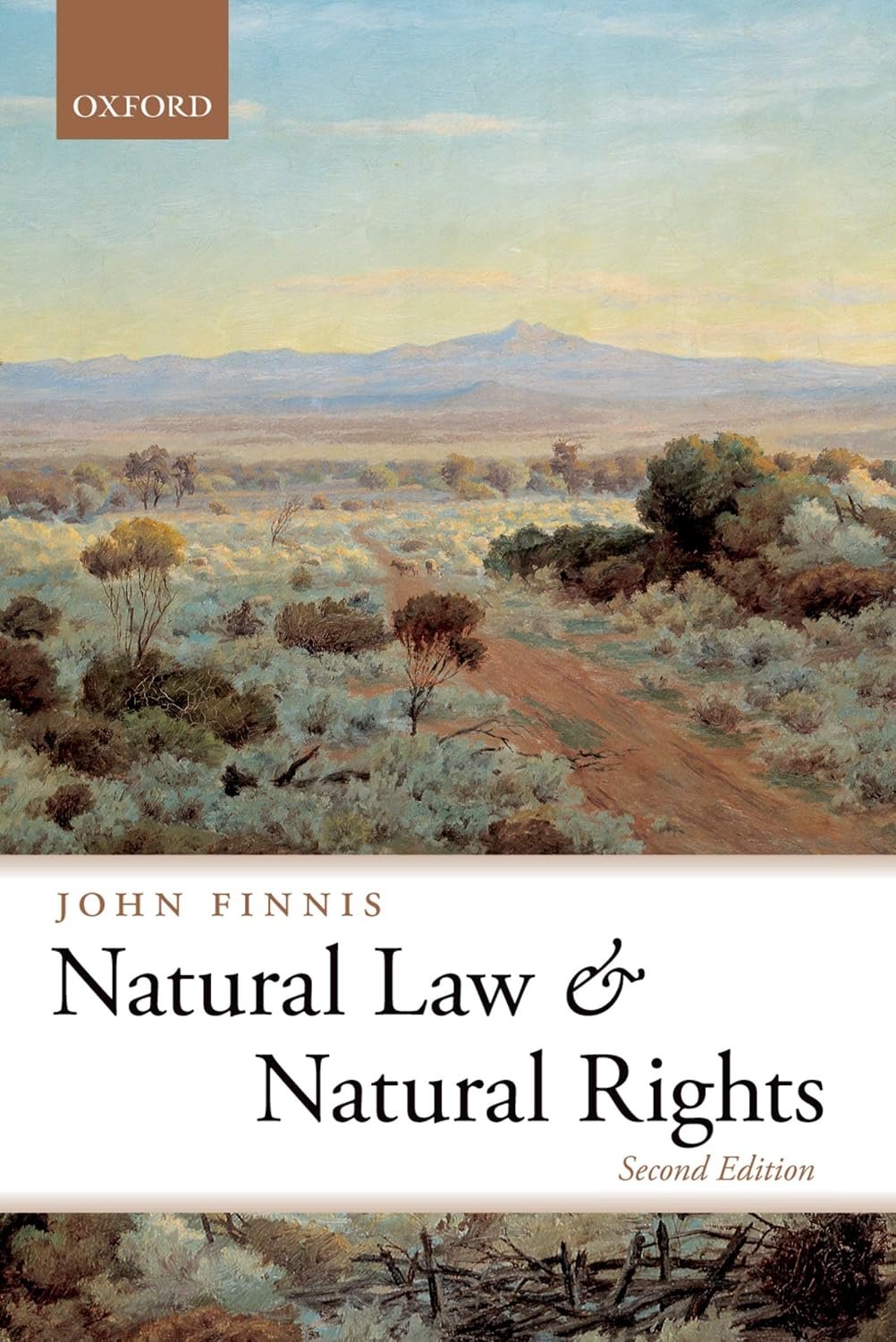
First published in 1980, Natural Law and Natural Rights stands as a monumental contribution to the philosophy of law, offering readers a comprehensive exploration of one of the most enduring frameworks in legal and moral thought.
This book provides more than just an academic exercise—it presents a substantive argument that reconnects legal theory with broader ethical and social concerns. Finnis carefully examines how every descriptive social science ultimately depends upon evaluations by the theorist, establishing that a critical basis for such evaluations must rest on a theory of natural law. He systematically addresses standard contemporary objections to natural law theory, demonstrating that many criticisms stem from serious misunderstandings rather than substantive flaws.
The work develops a sophisticated account of basic human goods and practical reasonableness, exploring how these concepts inform our understanding of community, justice, and human rights. Finnis carefully analyzes the logical structure of rights-talk and examines the bases upon which human rights are grounded, their specification, and their inherent limits. This approach allows readers to see how abstract philosophical principles translate into concrete legal and social frameworks.
What makes this second edition particularly valuable is Finnis's substantial postscript, written thirty years after the original publication. Here, he engages with decades of discussion, criticism, and further developments in the field, refining and developing his original theory. This dialogue between the past and present creates a living text that continues to evolve while maintaining its philosophical integrity.
Whether you're a law student grappling with the foundations of jurisprudence, a philosophy student exploring moral theory, or simply someone interested in how legal systems relate to broader ethical frameworks, this book offers unparalleled depth and clarity. It bridges the gap between abstract theory and practical application, showing how natural law thinking continues to inform contemporary debates about justice, authority, and the relationship between legal and moral obligations.