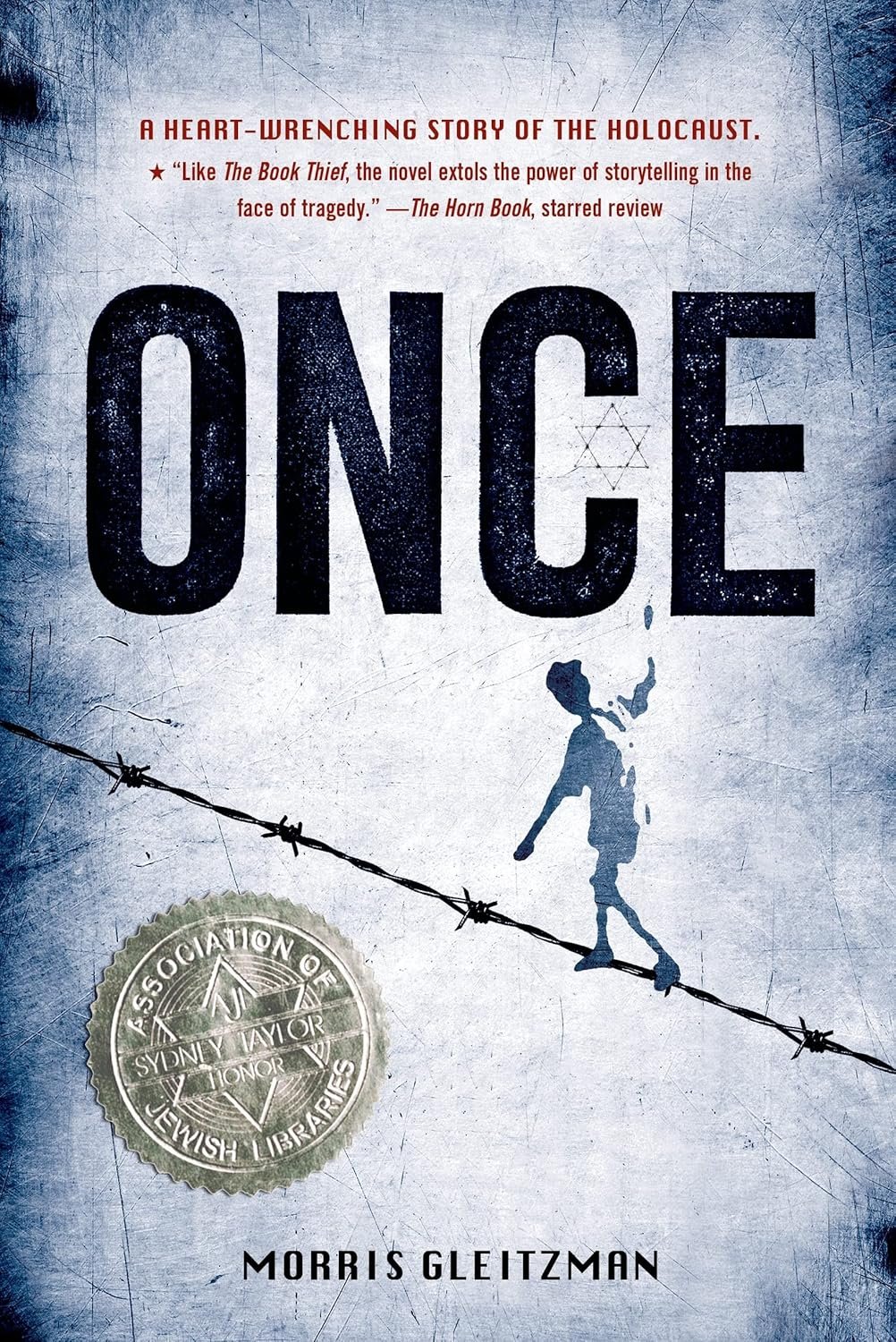
Once, written by Morris Gleitzman, recounts the harrowing yet hopeful tale of a young Jewish boy named Felix, who finds himself in a precarious situation during 1942 in Nazi-occupied Poland. The narrative begins in a Catholic orphanage where Felix has been sent, all the while believing that his parents are merely away on a trip to salvage their ailing bookselling business. Unbeknownst to him, the true horrors of war are unfolding outside the orphanage’s walls.
Felix’s naive understanding of his circumstances becomes a poignant theme of the story. He interprets mundane events as signs filled with hope—such as receiving a whole carrot in his soup, which he believes indicates that his parents are coming for him. His innocent misconceptions highlight the brilliance of his character’s perspective, allowing readers, both young and old, to grapple with the grim realities surrounding him while retaining a sense of optimism.
As Felix embarks on a courageous journey to warn his parents, he is unknowingly stepping into a world filled with danger and cruelty. His initial view of the Nazis as benign librarians come to cleanse their library soon gives way to the horrifying reality of their genocidal intentions. Through Felix’s eyes, Gleitzman reveals the heartbreaking consequences of hate and fear, while also weaving moments of humor and friendship that remind readers of the resilience of the human spirit.
The beauty of this narrative lies in its ability to explore heavy themes with a balance of sensitivity and lightheartedness. Felix’s unwavering hope and spirit serve as a reminder that even in the darkest of times, love and friendship hold immense power. Readers will find themselves fully immersed in a story that not only enhances their understanding of history but also speaks to the universal truths of courage and compassion.
Once is not just a story about survival; it is a testament to the strength of hope and the importance of storytelling itself—the stories we tell ourselves can often shape our reality.