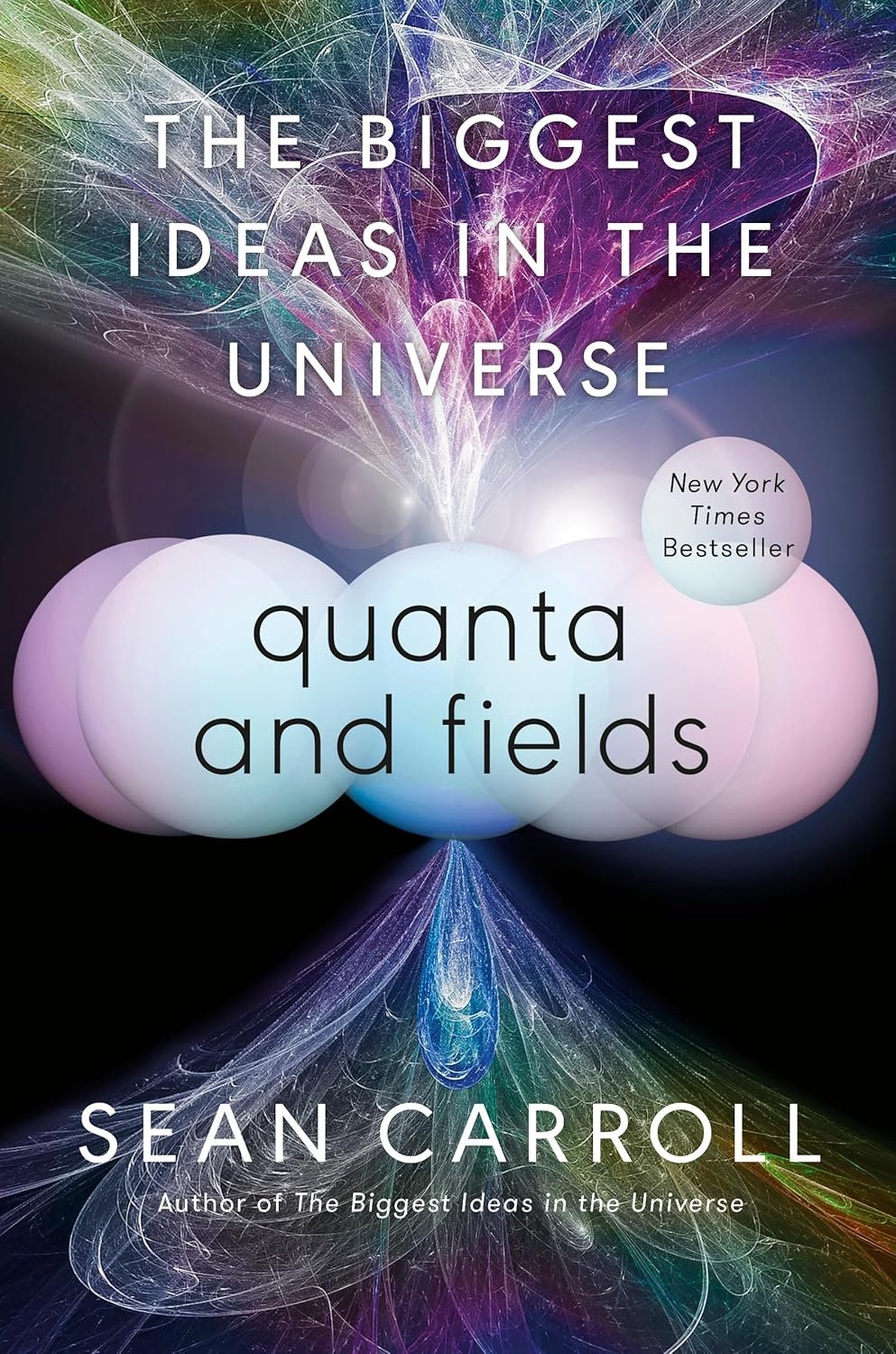
Picture this: you're staring at the stars, pondering what everything around you—from your coffee mug to distant galaxies—is really made of. Sean Carroll's Quanta and Fields, the second installment in his acclaimed The Biggest Ideas in the Universe series, pulls back the curtain on quantum field theory, the framework physicists use to describe nature's deepest workings.
We've all grown up with atoms and particles as the basic stuff of the world, but quantum field theory flips that script. Fields aren't just abstract math; they're the vibrating essence that gives rise to particles. Carroll starts from quantum mechanics basics like measurement and entanglement, then builds to how these fields explain antimatter, atomic scales, and the rock-solid feel of everyday objects. No hand-wavy analogies here—he shows the actual equations, step by step, in a way that's surprisingly approachable.
It's not just theory; these ideas power everything from transistors in your phone to the Large Hadron Collider's hunts for new physics. Reading this, you'll get why quantum field theory succeeded where others faltered, predicting outcomes with insane precision.
Grab your Kindle and dive in during a commute or cozy evening. It's ideal for science buffs, armchair physicists, or anyone who's scratched their head over 'what is everything made of?' Carroll writes like he's chatting over coffee, blending rigor with clarity. By the end, concepts that once seemed impenetrable—like why there's more matter than antimatter—feel intuitive. This isn't pop science fluff; it's a genuine peek into how physicists think, empowering you to grasp the universe's quantum heart.
Whether you're revisiting Einstein's legacy or stepping beyond it for the first time, Quanta and Fields delivers that 'aha' rush. Your worldview? Forever upgraded.