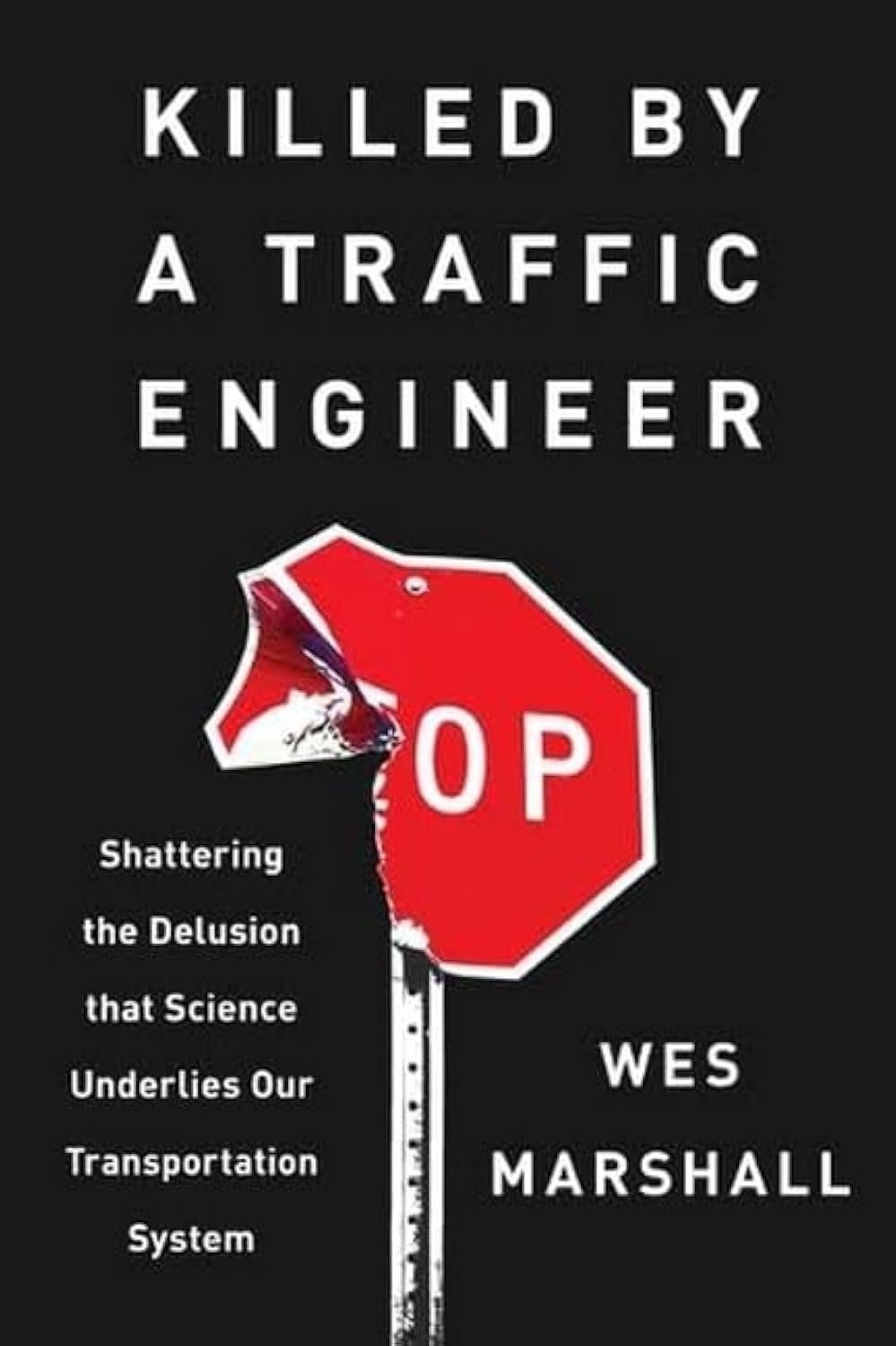
Imagine driving down a street engineered by experts who claim to have all the scientific answers, yet somehow, nearly four million Americans have died on roads since we started counting in 1899. The numbers aren't just historical—they're getting worse, year after year. What if the entire foundation of modern traffic engineering is built on shaky ground?
Civil engineering professor Wes Marshall pulls back the curtain on the transportation industry's dirty little secret: there's remarkably little actual science behind how we design our streets. In "Killed by a Traffic Engineer," he reveals how traffic engineering "research" remains largely unexamined, outdated, or deliberately steered by industry interests focused solely on moving cars from point A to B as quickly as possible.
Marshall systematically dismantles the flawed assumptions that have shaped our transportation system for decades. He examines how our obsession with speed has disconnected from any meaningful consideration of safety, how capacity-focused design creates inherently dangerous environments, and how we've been blaming human error instead of addressing the root cause: poor engineering choices.
This isn't just academic—it's about the real lives lost every day on roads that were never truly designed to protect anyone. The book tackles uncomfortable truths about faulty data collection, liability-driven reporting, and how we measure (or don't measure) road safety outcomes. Most importantly, it offers hope: a roadmap for transforming our streets into places where both people in cars and those outside them can coexist safely.
Whether you're a concerned citizen, a policy maker, or even someone working in transportation, "Killed by a Traffic Engineer" will forever change how you see your city's streets. It's not just about understanding what's wrong—it's about demanding better and being part of the solution that finally puts human lives first in transportation planning.