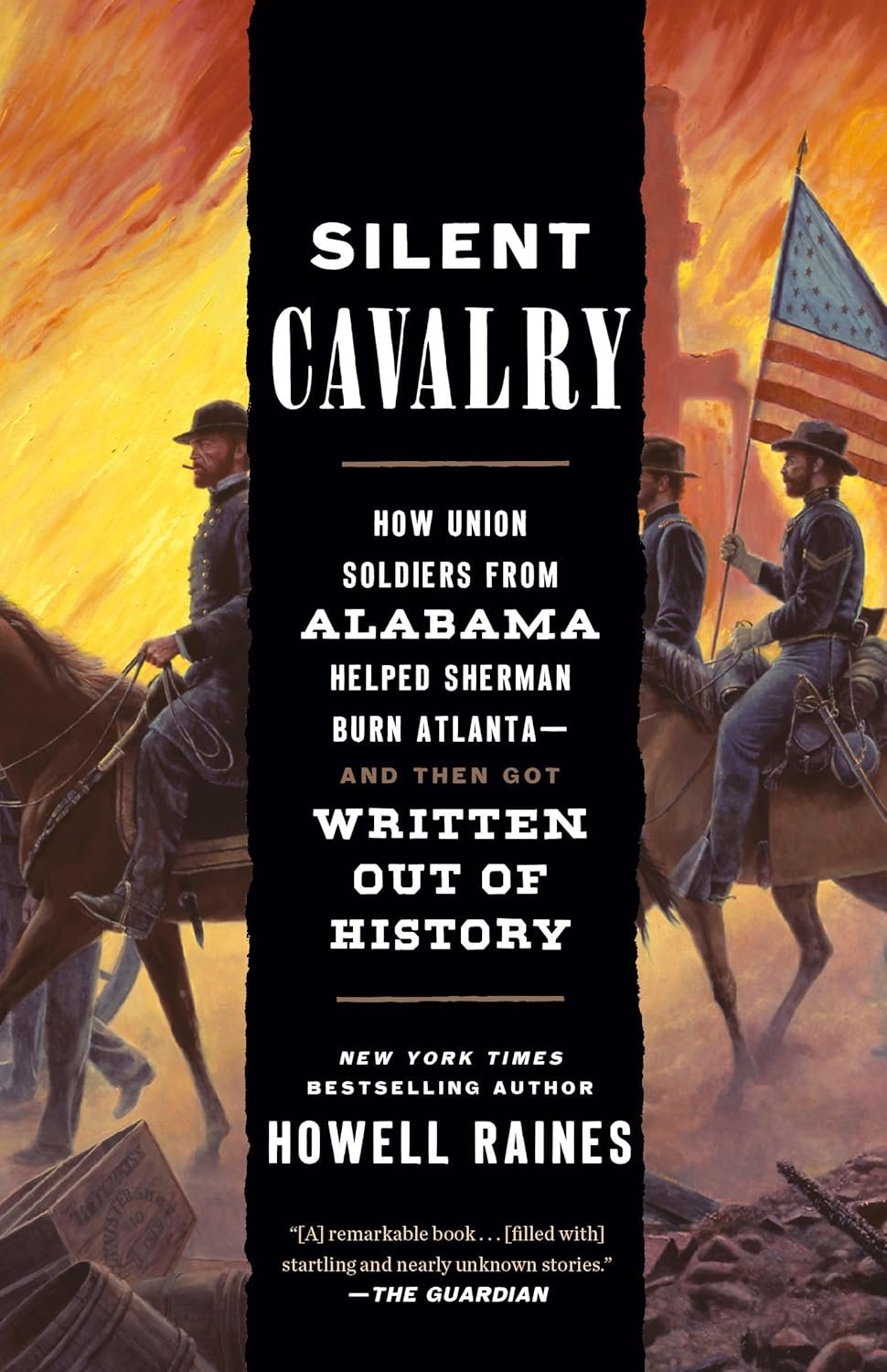
"Silent Cavalry: How Union Soldiers from Alabama Helped Sherman Burn Atlanta--and Then Got Written Out of History" is a groundbreaking work by Pulitzer Prize-winning journalist Howell Raines. In this compelling narrative, Raines delves deep into the untold story of the Union soldiers from Alabama, particularly the First Alabama Cavalry, U.S.A., who played a decisive role in one of the most pivotal events of the Civil War. With a blend of epic American history and intimate family saga, this book seeks to restore the legacy of these brave fighters and the complex tapestry of American history.
The First Alabama Cavalry consisted of 2,066 resilient yeoman farmers, including sixteen formerly enslaved Black men, who courageously fought alongside Union forces under General William Tecumseh Sherman during the burning of Atlanta. Despite their significant contributions, these soldiers have been omitted from mainstream historical narratives, largely due to a conspiratorial effort to downplay their achievements and restore a skewed version of history that glorifies the Confederacy.
Raines not only recounts thrilling military engagements but also investigates the societal forces that worked to erase the contributions of these soldiers from history. The author’s investigative skills, honed over six decades in journalism, allow him to trace the plots that aimed to undermine the recognition of these ‘renegade southerners’, implicating various actors from former Confederate leaders to Ivy League historians in the effort to suppress their legacy.
This book, therefore, is not just an exploration of a lost chapter in Civil War history but a passionate call to redefine our understanding of the narratives that shaped both Alabama and American history. Raines' work resonates with the plea to integrate these hidden stories into our collective consciousness, allowing us to recognize new heroes from the past and appreciate their invaluable contributions.
In essence, "Silent Cavalry" serves as a testament to the immense power of historians, illustrating how they can both contribute to and challenge our understanding of history. As Raines embarks on this investigative and personal journey, readers are invited to reflect on how history is constructed and whose stories are told, revealing the voices that have unjustly faded into silence.