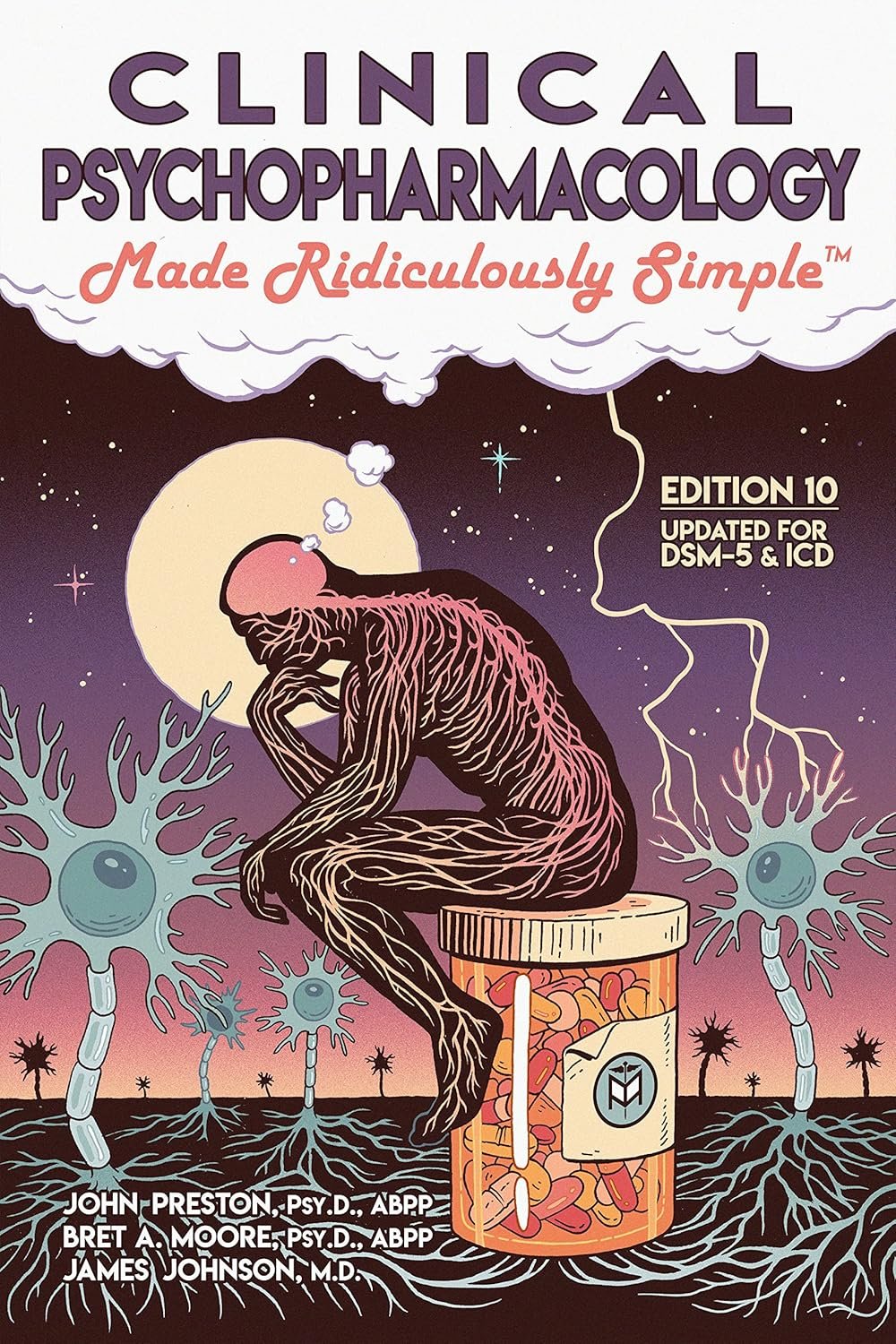
Ever stared at a prescription pad feeling like the world of psych meds is a tangled web? You're not alone. As a clinician, getting mental health treatments right means juggling drug interactions, side effects, and patient-specific needs—all while keeping up with evolving guidelines. That's where this gem of a book steps in, turning what could be a nightmare into something refreshingly straightforward.
Treating psychological disorders like anxiety, depression, or bipolar requires more than just empathy; it demands a solid grasp of pharmacology. Missteps in dosing or ignoring cultural contexts can lead to suboptimal outcomes. Plus, with new medications hitting the market regularly and DSM-5 updates reshaping diagnoses, staying current feels daunting. This book tackles that head-on, emphasizing two pillars: deep knowledge of psychotropics and precise diagnosis.
In its 10th edition, Clinical Psychopharmacology Made Ridiculously Simple offers a concise yet thorough review that's been refined over years. You'll get updated info on the newest drugs, complete with indications, dosages, and monitoring tips. New chapters dive into neurobiology—explaining how these meds actually work in the brain—and cultural influences, helping you tailor treatments sensitively. It doesn't skimp on the basics either: case studies illustrate real-world application, and there's dedicated coverage of over-the-counter meds and supplements that patients often overlook.
Imagine prepping for a consult with a patient who's resistant to therapy alone. Flipping through these pages, you spot the ideal combo of meds based on their history—backed by neurobiological insights that make sense of their symptoms. For students, it's a lifesaver during rotations, condensing textbooks into bite-sized wisdom. Even in busy clinics, the format lets you skim for specifics or deep-dive as needed, saving time and boosting confidence.
Whether you're a psychiatrist fine-tuning long-term care or a primary care doc dipping into mental health, this book bridges gaps with clarity. It's not about memorizing endless lists; it's about understanding principles that stick, leading to better conversations with patients and more effective treatments. Grab it and see how ridiculously simple psychopharmacology can be—your practice will thank you.