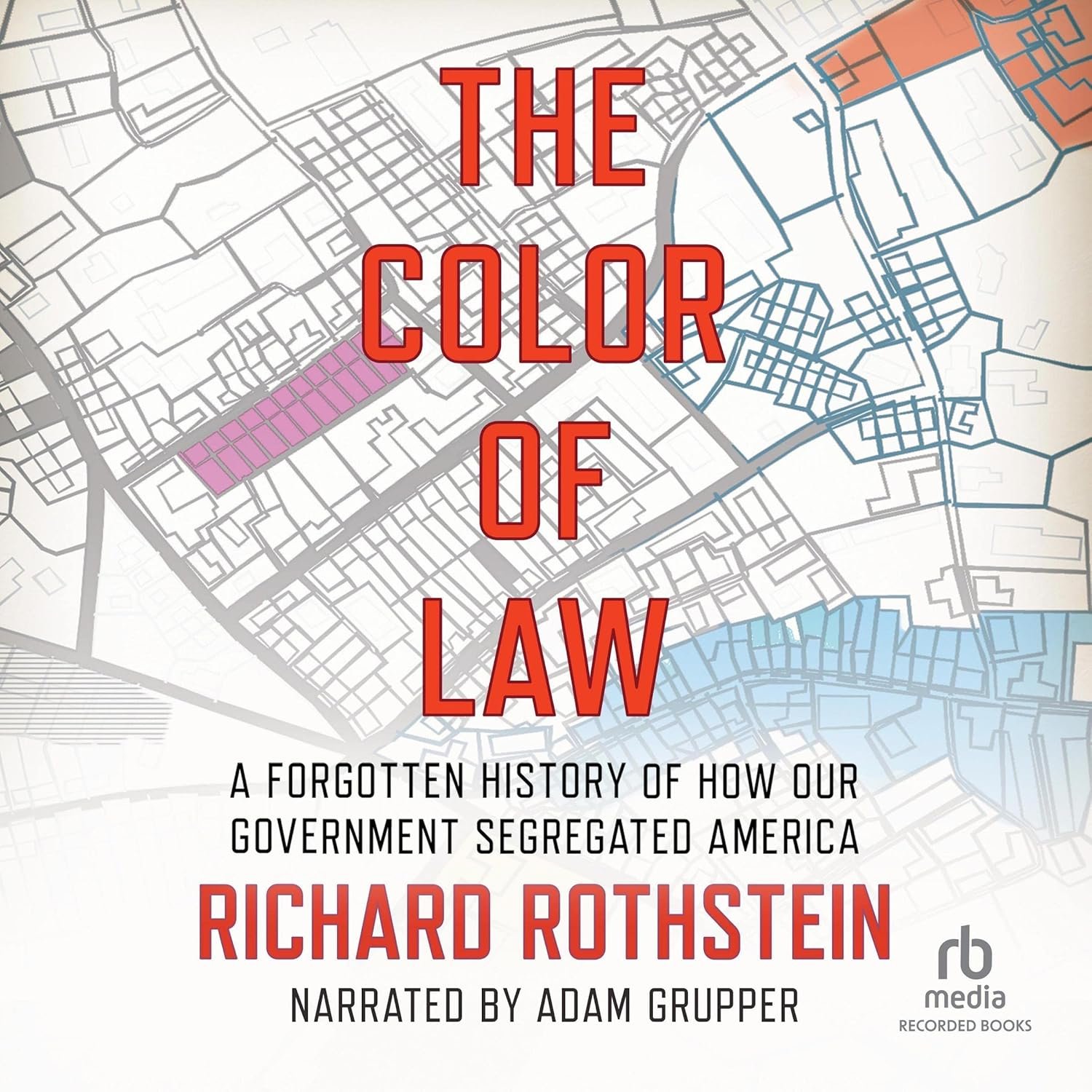
In this groundbreaking work, Richard Rothstein presents a compelling narrative that reframes our understanding of urban segregation in America. The Color of Law dismantles the myth that racial divisions in cities emerged solely from uncoordinated individual actions or market forces. Rothstein argues that it was, in fact, de jure segregation—the systematic and enforced policies established by local, state, and federal authorities—that facilitated the racial divides seen in American cities today.
Beginning with the great migration of African Americans from the South to urban centers in the North during the 1920s, Rothstein traces a timeline marked by explicit racial zoning laws that laid the foundation for systemic inequality. He reveals how government initiatives and actions led to the establishment of segregated public housing, while simultaneously dismantling integrated neighborhoods, further entrenching racial disparities.
Rothstein's research highlights the role of urban planning decisions made in the 1950s, which have resulted in the economically disadvantaged neighborhoods we are familiar with today. As acknowledged by notable figures such as Ta-Nehisi Coates, this narrative is essential for understanding how federal subsidies post-World War II facilitated the suburbanization of whites while excluding African Americans from home ownership opportunities. This history of inequality was enforced by police and judicial systems that upheld the norms of segregation, often with violence against Black families trying to integrate.
Though the Fair Housing Act of 1968 put an end to overt discrimination, it did nothing to address the systemic patterns rooted in historical injustices. Recent events across the nation, including protests following violence in cities like Baltimore and Minneapolis, remind us of the lingering effects of these longstanding divisions.
Rothstein’s work is presented not just as a historical account but as a crucial call to action—a plea for the nation to confront its unconstitutional past in order to foster a more equitable future. Understanding this history is vital for any movement towards justice and healing in today's America.