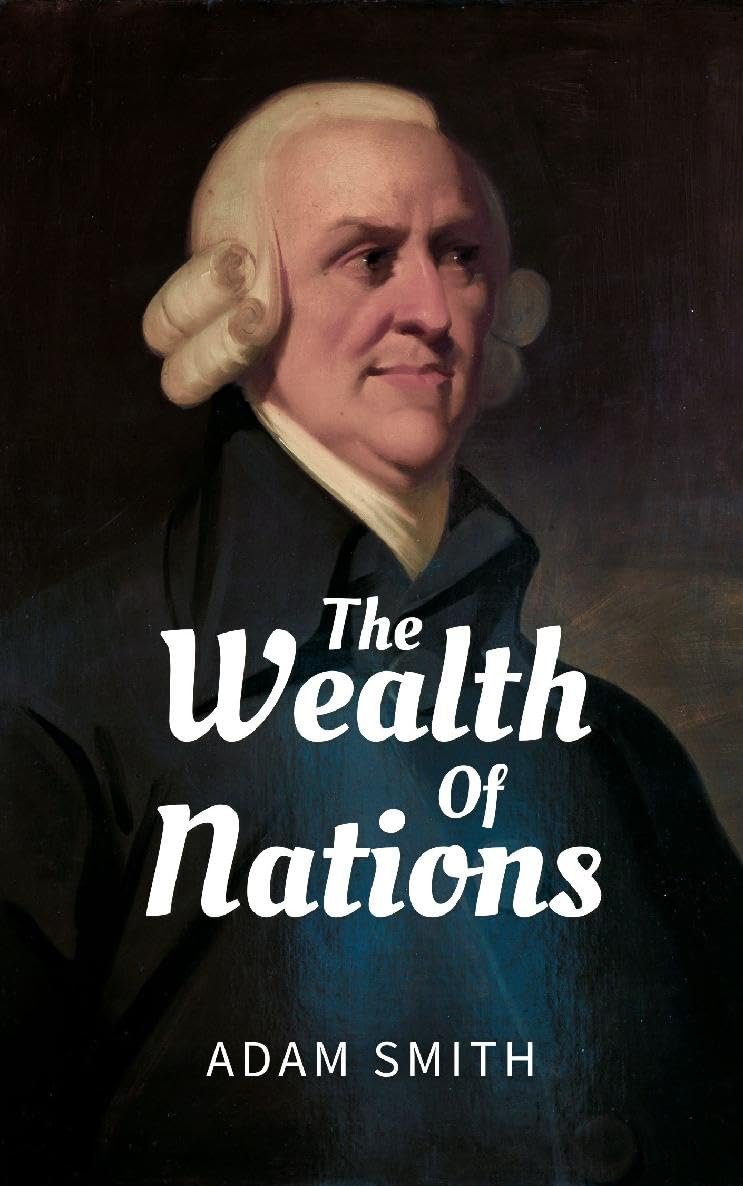
Published: 1776
Author: Adam Smith (1723-1790)
Considered the magnum opus of Scottish economist and moral philosopher Adam Smith, The Wealth of Nations presents one of the first detailed analyses of what contributes to a nation's wealth. Often regarded as a cornerstone of classical economics, this seminal work laid the groundwork for modern economic theory and policy.
In this groundbreaking book, Smith offers profound insights into the mechanics of an economy at the dawn of the Industrial Revolution. He adeptly explores concepts such as the division of labor, which enhances productivity by breaking down tasks into specialized roles, and the fundamental principles of free market systems that facilitate trade and commerce.
Smith's exploration extends beyond mere economics; he intertwines philosophical reflections on human nature and the moral implications of economic activity. His analysis of supply and demand, competition, and the invisible hand phenomenon provides a comprehensive framework that remains relevant to this day.
Through a thorough examination of how nations accumulate wealth and the processes that drive economic growth, The Wealth of Nations not only transformed the field of economics but also influenced political thought and policy around the world. It brings critical questions to the forefront, such as how government regulation affects economic performance and the moral responsibilities of business and government entities.
This book is essential reading for students, educators, and anyone interested in the intricate dynamics of wealth creation and economic theory. Smith's work continues to inspire debates and discussions among economists and policy makers, making it a timeless classic worth revisiting.
Key Themes:
Engage with The Wealth of Nations to better understand the economic forces that shape our world.