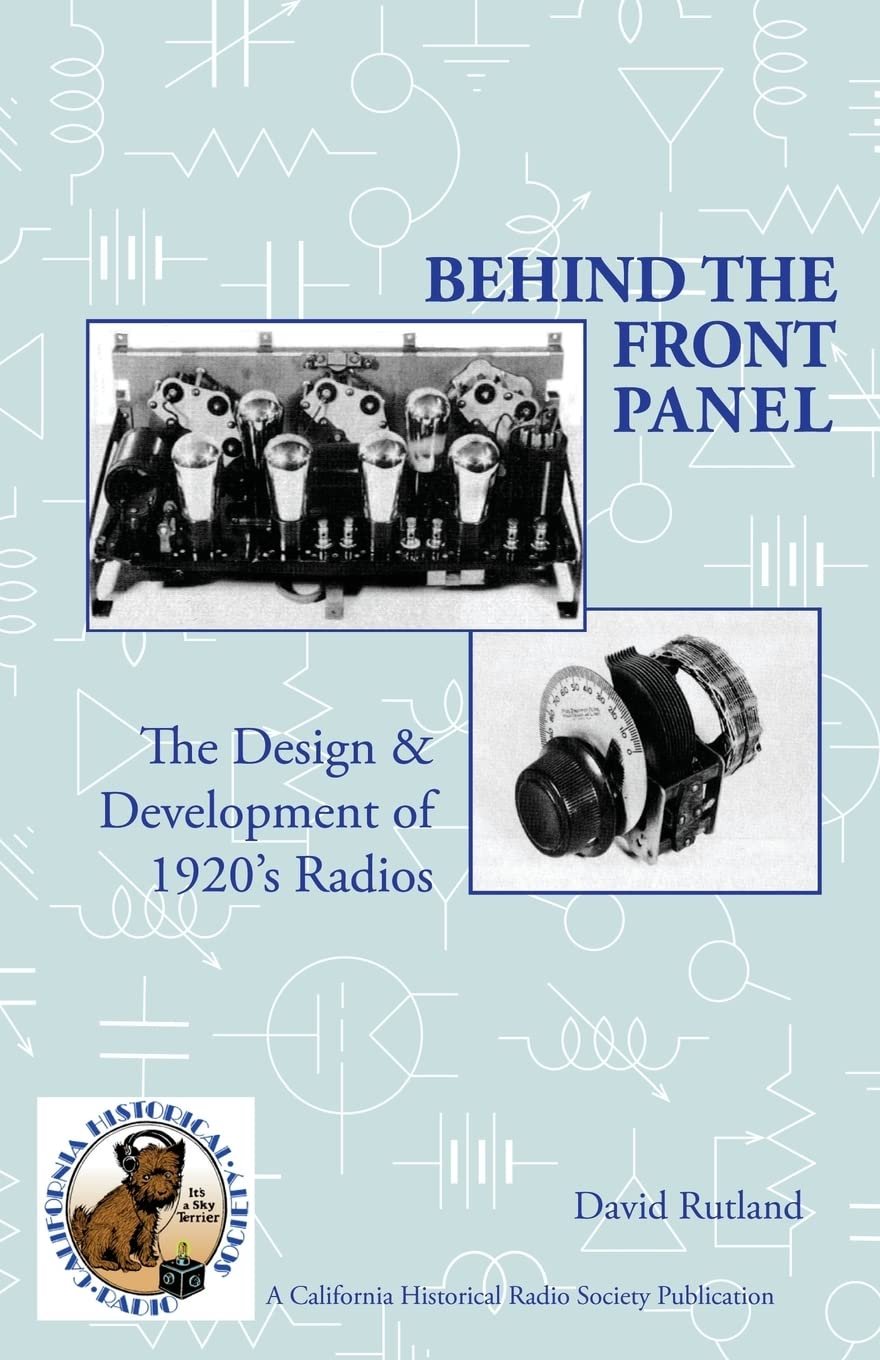
Picture this: it's the 1920s, and families huddle around a wooden cabinet radio, voices crackling from across the country. What magic happened behind that ornate front panel? Behind the Front Panel by David Rutland, a 25-year electronics engineer veteran, pulls back the curtain on the birth and evolution of broadcast radios.
Rutland starts at the turn of the century with the radio tube's invention, then zooms into the 1920s engineering feats. He breaks down circuits and components—like resistors, capacitors, and transformers—using straightforward language anyone can grasp, no PhD required. You'll see how designers tackled battery power challenges and tuned signals for crystal-clear reception in the pre-transistor era.
What sets this book apart? It's grounded in reality. Rutland draws from over 45 actual radios made in that transformative decade, complete with 25 black-and-white photographs of genuine parts. Imagine holding a page showing the innards of a Crosley or Atwater Kent—tangible glimpses into why these sets became household staples.
Simplified schematics and illustrations make complex ideas click. Want to know why early detectors used galena crystals or how grid leaks stabilized amplification? It's all here, explained like a shop talk with a knowledgeable buddy.
For restorers, it's a troubleshooting bible revealing original design logic. History lovers get the cultural shift: radio sparking national pastimes into daily life. Even if you're just nostalgic for analog tech in our digital world, it sparks appreciation for human ingenuity.
Grab it for late-night reads under a lamp, workbench reference during restorations, or as a thoughtful gift for the tinkerer in your life. Re-mastered by the California Historical Radio Society, this paperback keeps a classic alive. Around 200 pages of dense, rewarding content that transports you back—minus the static.