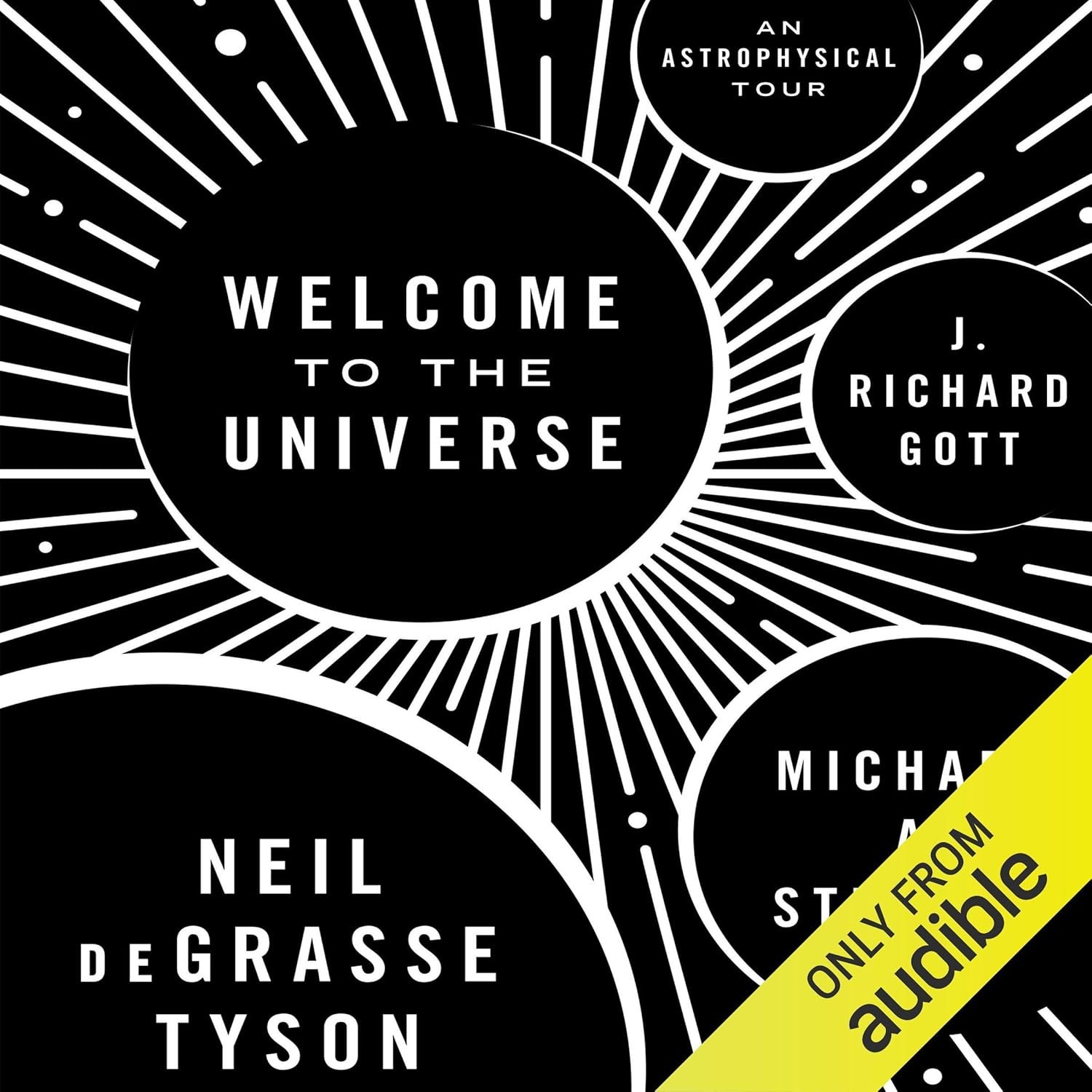
Have you ever stared at the night sky and wondered about the stories hidden in those twinkling lights? That's exactly what drew me to Welcome to the Universe, an audiobook that turns those distant wonders into an intimate adventure. Narrated with the passion of experts who live and breathe astrophysics, it's like having Neil deGrasse Tyson, Michael A. Strauss, and J. Richard Gott as your personal tour guides through space.
Many of us feel a spark of awe when thinking about planets, stars, or the vast emptiness between galaxies, but the science can seem overwhelming. Questions pile up: How do stars form and fade? What caused Pluto's demotion? Is time travel even possible? This audiobook dives into these mysteries without assuming you're an expert, breaking down astrophysical concepts into digestible, engaging narratives that stick with you.
Drawing from their acclaimed Princeton course, the authors cover the solar system's quirks to the universe's grand scale. You'll learn about wormholes that could bend space-time, the life cycles of stars that end in spectacular supernovae, and the accelerating expansion hinting at dark energy. They explore black holes' enigmatic pull and the multiverse theory, pondering if ours is just one bubble in an infinite foam. Each chapter builds on the last, revealing how recent telescope observations and particle physics experiments are reshaping our cosmic understanding.
Listening to this, I found myself pausing to gaze upward, connecting abstract ideas to visible phenomena—like spotting a meteor and recalling the authors' take on shooting stars as space debris burning up. It's not just facts; it's a mindset shift that makes everyday stargazing richer. Whether you're commuting, relaxing at home, or winding down before bed, these 15-20 minute chapters fit seamlessly into your routine, turning mundane moments into portals to infinity.
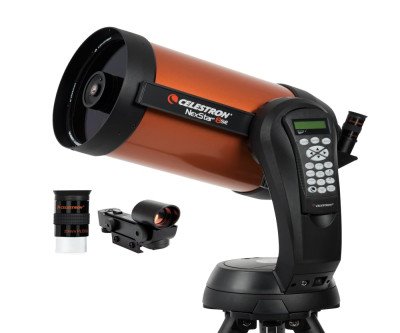
If you've got a telescope gathering dust or just love documentaries on space, this audiobook reignites that wonder. It satisfies the itch for knowledge without the dryness of textbooks, leaving you with a deeper appreciation for our place in the cosmos. Dive in, and you'll see the universe not as a cold void, but as a vibrant, unfolding story we're all part of.