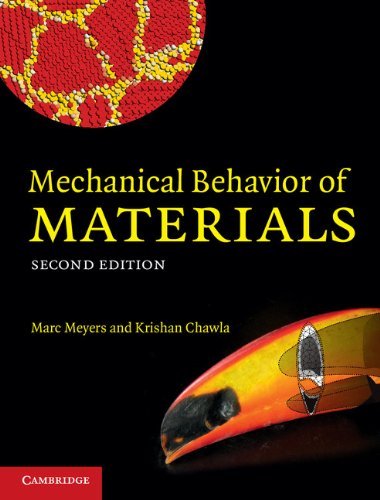
Have you ever looked at a bridge, a building, or even a smartphone and wondered why it doesn't just fall apart? The answer lies in the hidden world of materials science, where tiny structures at the microscopic level determine whether materials bend, break, or bounce back. This isn't just another textbook—it's your key to understanding the fundamental principles that govern everything from the strength of steel to the flexibility of plastics.
What makes a skyscraper stand tall while a cracker snaps easily? Why do some metals stretch without breaking while others shatter at the slightest impact? This book demystifies these questions by connecting the invisible world of atomic structures to the materials we interact with every day. Through clear explanations and stunning micrographs, you'll see how the arrangement of molecules creates the properties that make our modern world possible.
Forget dry, theoretical approaches. This 2nd Edition presents mechanical behavior in a way that's mathematically simple yet conceptually profound. You'll explore how different materials—from metals and ceramics to biomaterials and electronic components—respond to forces, and understand why certain materials are chosen for specific applications. The integrated approach shows how microstructure controls mechanical behavior through extensive illustrations and real-world examples.
Whether you're an engineering student, a professional looking to refresh your knowledge, or simply someone fascinated by how things work, this book offers something special. With new worked examples and exercises, you can test your understanding as you go. Plus, with online resources including lecture slides and solutions, you have everything you need to master the concepts or just satisfy your curiosity about the hidden forces that shape our world.
The Kindle edition means you can access this comprehensive guide anywhere, anytime. No more lugging around heavy textbooks—just pure knowledge at your fingertips. Highlight important passages, take notes, and revisit complex concepts whenever inspiration strikes. It's the perfect companion for students, professionals, or lifelong learners who want to understand the science that makes modern engineering possible.