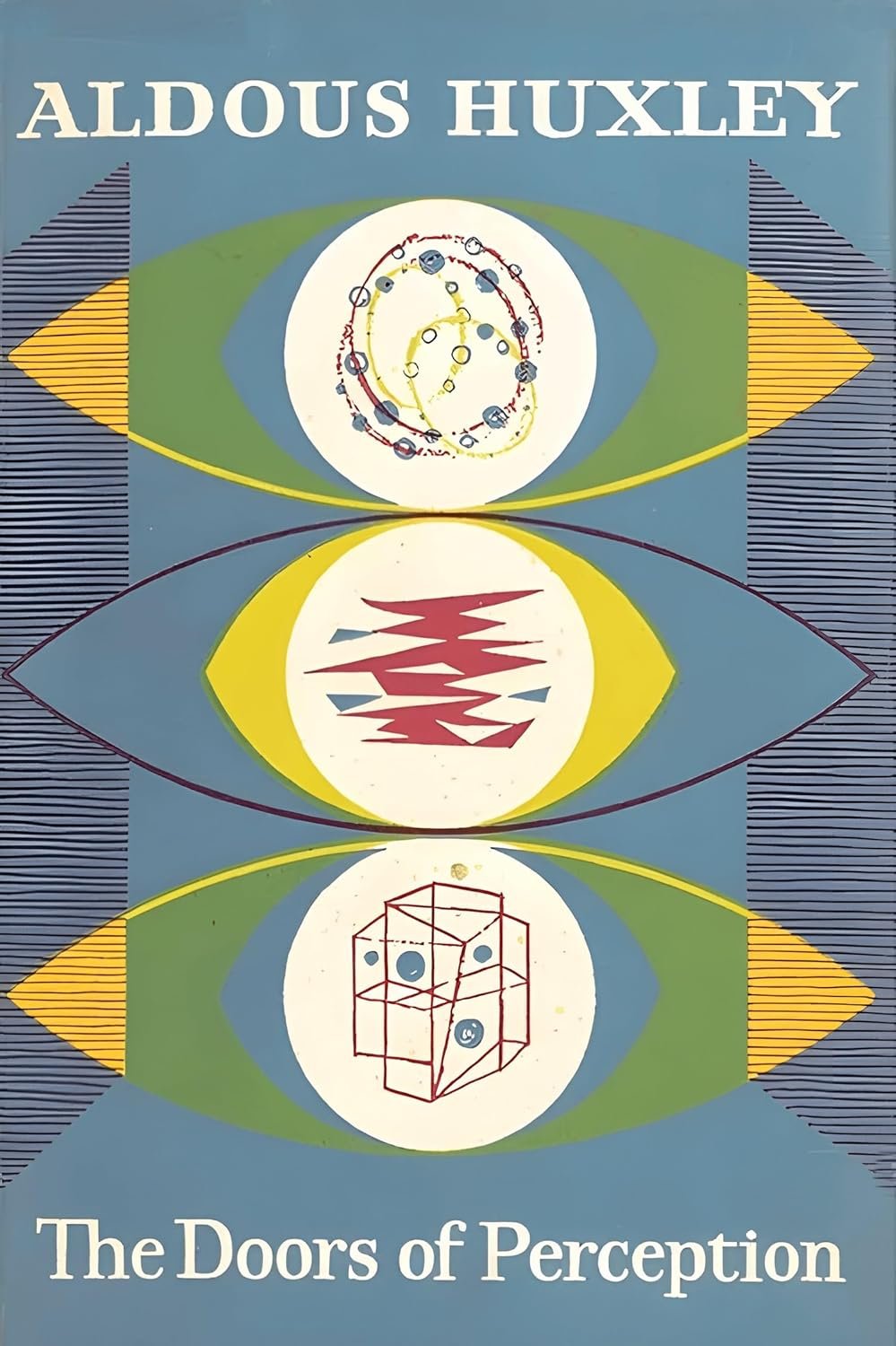
‘The man who comes back through the Door in the Wall will never be quite the same as the man who went out’. This profound statement sets the stage for Aldous Huxley’s compelling exploration of human consciousness in The Doors of Perception. First embarking on his mind-expanding journey with mescalin in 1953, Huxley dedicated the following decade to studying the effects of hallucinogenic substances on the human experience.
In this seminal work, Huxley eloquently articulates how these psychedelic experiences opened the door to a ‘sacramental vision of reality,’ allowing him and others to perceive the world through a different lens. Through detailed observations and philosophical musings, he describes the beauty that can be uncovered when one's mind transcends ordinary awareness. Huxley’s writing invites readers to consider the fullness of existence and the spiritual dimensions that lie dormant in our everyday lives.
However, Huxley does not shy away from addressing the darker side of these experiences. He delves into the spiritual and moral implications of chemical alterations to perception, cautioning that the transcendence of bliss can easily turn into a harrowing psychological descent. He discusses how negative emotions and chaotic thoughts can corrupt an otherwise illuminating experience, creating a ‘schizophrenic hell’ instead of the anticipated Nirvana.
Through careful analysis, Huxley engages with the similarities and contrasts of the hallucinogenic experience, making a case for the importance of understanding both the beauty and the horror it can evoke. The Doors of Perception stands as a landmark text not only for the psychedelic movement but also for anyone seeking to understand the complexities of perception and consciousness. It challenges readers to reconsider their own realities and the possible doors of perception they might choose to open.
In conclusion, Huxley’s work remains a powerful exploration into the nature of reality and consciousness, encouraging a dialogue that resonates to this day, perfect for enthusiasts of philosophy, psychology, and experimental literature.