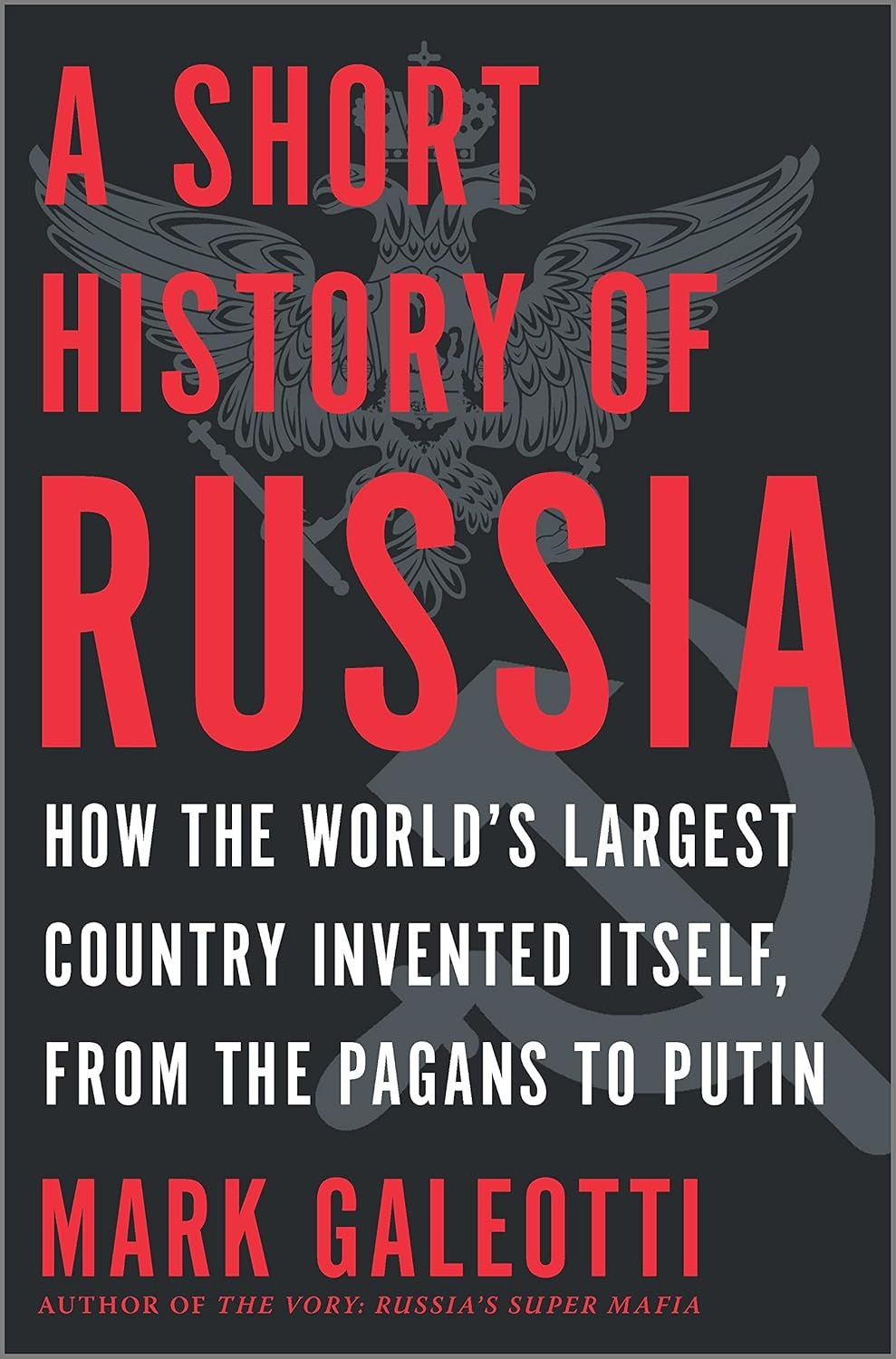
Picture a country with no clear borders, a patchwork of ethnic groups, and a history that's been mythologized to hold it all together. That's Russia, and in today's headlines—from Ukraine tensions to energy politics—understanding its past isn't just academic; it's key to making sense of the present. Mark Galeotti's 'A Short History of Russia' steps in here, offering a brisk, illuminating tour that connects the dots without burying you in dates or dry facts.
Russia's story is one of constant reinvention. Without natural boundaries like mountains or oceans, it's always been shaped by outsiders—nomads, Vikings, Mongols, and later Europeans. This lack of a fixed core has led to waves of empire-building, from Ivan the Terrible's brutal expansions to Catherine the Great's enlightened reforms. But each era brought internal struggles too: peasant revolts, royal intrigues, and the seismic shifts of the 1917 Revolution that toppled the Romanovs and birthed the Soviet experiment.
What makes this book stand out is how it weaves these threads into a narrative that's alive with human drama. Galeotti doesn't just list events; he shows how leaders like Stalin during the Cold War or Gorbachev with Chernobyl's fallout used history to justify their paths. And now, with Vladimir Putin's rise from obscurity, we see echoes of tsarist ambitions in modern moves, all while Russia grapples with its Soviet hangover.
At its heart, 'A Short History of Russia' explores two big ideas: how external forces molded the nation, and how Russians themselves have scripted and rescripted their saga to cope. Think of it as a lens for today's world—why does Russia view NATO as a threat? How does the memory of World War II still fuel national pride? The book answers these without jargon, drawing on legends, wars, and pivotal moments to paint a vivid portrait.
Benefits come alive in the details: you'll learn about the Romanov dynasty's opulence and downfall, the Cold War's proxy battles, and Putin's vision for a resurgent Russia. It's tangible history—imagine sipping coffee while tracing the Volga's role in trade routes or pondering how Siberian vastness bred a sense of endless possibility mixed with isolation.
This isn't a dusty textbook; it's a conversation starter. Pull it up on your Kindle during a commute to contextualize that podcast on Eastern Europe, or share insights over dinner about why sanctions hit so hard. For history buffs, it's a refresher that sparks deeper dives; for newcomers, it's an accessible entry that demystifies a powerhouse neighbor.
By the end, you'll feel more connected to the rhythms of Russian life—the resilience amid harsh winters, the cultural depth from Tolstoy to Tchaikovsky—and better equipped to navigate news from Moscow. Galeotti's take leaves you thoughtful, not overwhelmed, inviting you to see Russia's complexities as part of our shared human tapestry. (Word count: 412)