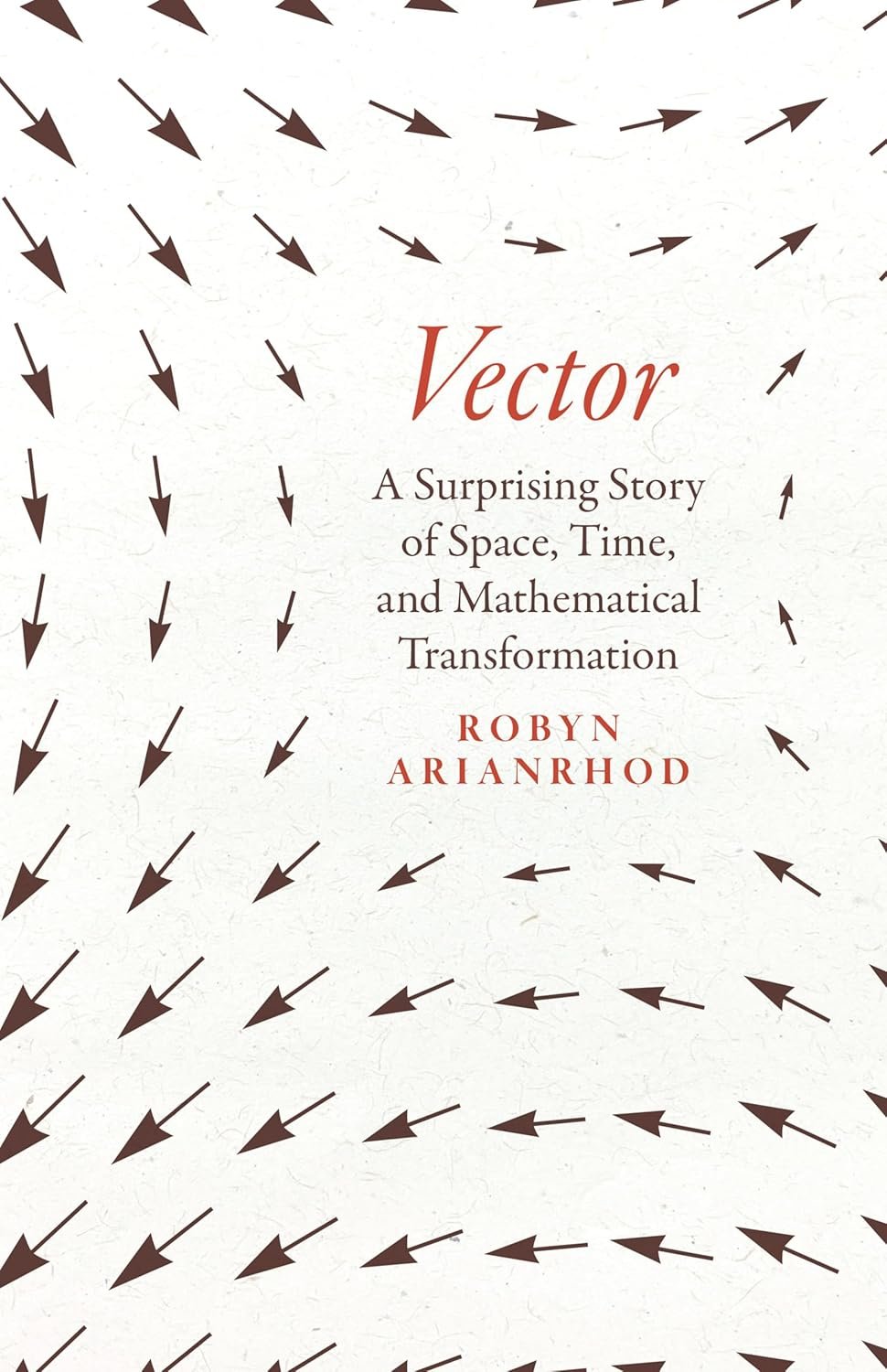
Picture this: a single symbol that captures not just size, but direction—and suddenly, the world snaps into new dimensions. That's the magic of vectors and tensors, and Robyn Arianrhod's Vector takes you deep into their surprising origin story. Spanning 5,000 years, it's a gripping tale of how these tools let us grasp forces on roller coasters, turbines, or even curving space-time itself.
Back in school, vectors might've meant arrows with magnitude and direction for homework woes. But Arianrhod shows their true depth: tensors handle even richer data, like multiple dimensions at once. Without them, no Maxwell inventing electromagnetism for wireless tech, no Einstein bending space-time with gravity waves, no Dirac crafting quantum fields, and no Noether linking symmetry to energy conservation.
These aren't dry equations—they're the language physicists use to describe reality. Think about it: every time you search online, get directions via GPS, or scroll your phone, vectors crunch the data behind the scenes.
Whether you're a physics dropout reminiscing about amusement park force problems or a tech enthusiast pondering higher dimensions, this book bridges the gap. Read it on your Kindle during commutes, and you'll start spotting vectors everywhere—from app algorithms to star maps. It's that rare read blending history, biography, and math insight without overwhelming formulas. Dive in, and you'll never see a physics diagram—or your smartphone—the same way again.
At around 400 pages of engaging narrative, it's your ticket to understanding how one clever idea steered human discovery. Grab the Kindle edition and let the journey begin.