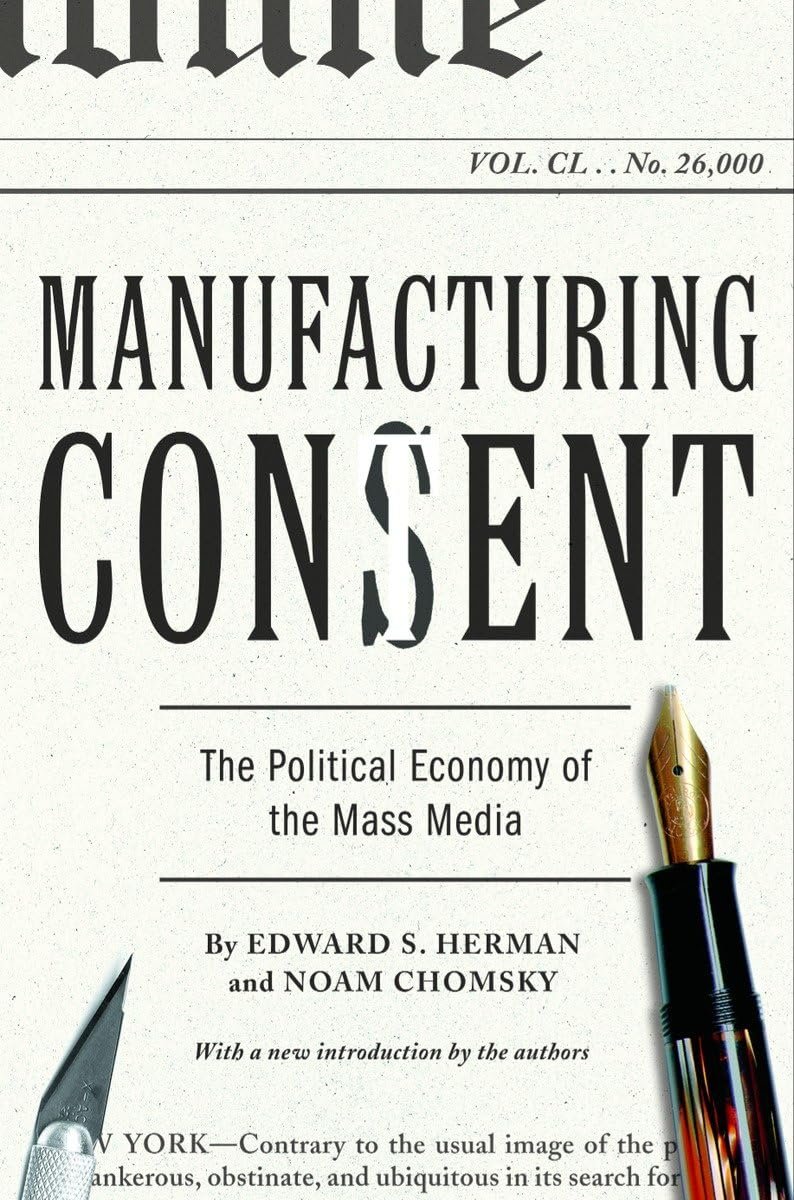
Picture this: you're scrolling through news feeds, and something feels off. Stories that challenge power get buried, while others flood the airwaves. That's the core insight of Manufacturing Consent by Noam Chomsky and Edward S. Herman—a book that pulls back the curtain on how mass media operates as a propaganda tool for elites.
At its heart, the book introduces the Propaganda Model, a simple yet powerful framework with five filters: media ownership, advertising revenue, elite news sources, 'flak' from powerful critics, and ideological enemies like communism (or today's equivalents). These aren't conspiracies; they're structural forces baked into the system. Herman and Chomsky back it up with meticulous research, dissecting real-world examples.
Remember the Vietnam War? The book contrasts media frenzy over 'worthy' victims (like those in enemy territories) with silence on 'unworthy' ones closer to home. It dives into Central American conflicts, where U.S.-backed atrocities barely registered compared to Soviet ones. Fast-forward with the updated introduction: coverage of NAFTA deals corporate interests sweetly, global protests get downplayed, and environmental regs face skepticism. These aren't abstract theories—they're patterns you can spot today in election reporting or corporate scandals.
Reading this changes how you consume media. You'll start questioning who benefits from a story, why certain voices dominate, and what's omitted. It's not about cynicism; it's empowerment. Students use it in journalism classes to analyze bias. Activists wield it to counter narratives. Everyday folks? It sharpens your bullshit detector, helping you navigate echo chambers and fake news floods.
Grab it for late-night reads that spark debates with friends. Pair it with current events—compare its predictions to today's headlines on tech giants or foreign policy. At around 400 pages of dense but accessible prose, it's a investment that pays off every time you turn on the TV. This paperback edition keeps the original punch with fresh context, making Manufacturing Consent as vital now as in 1988.
If you've ever felt gaslit by the news, this book hands you the decoder ring. Dive in, and watch your worldview expand.