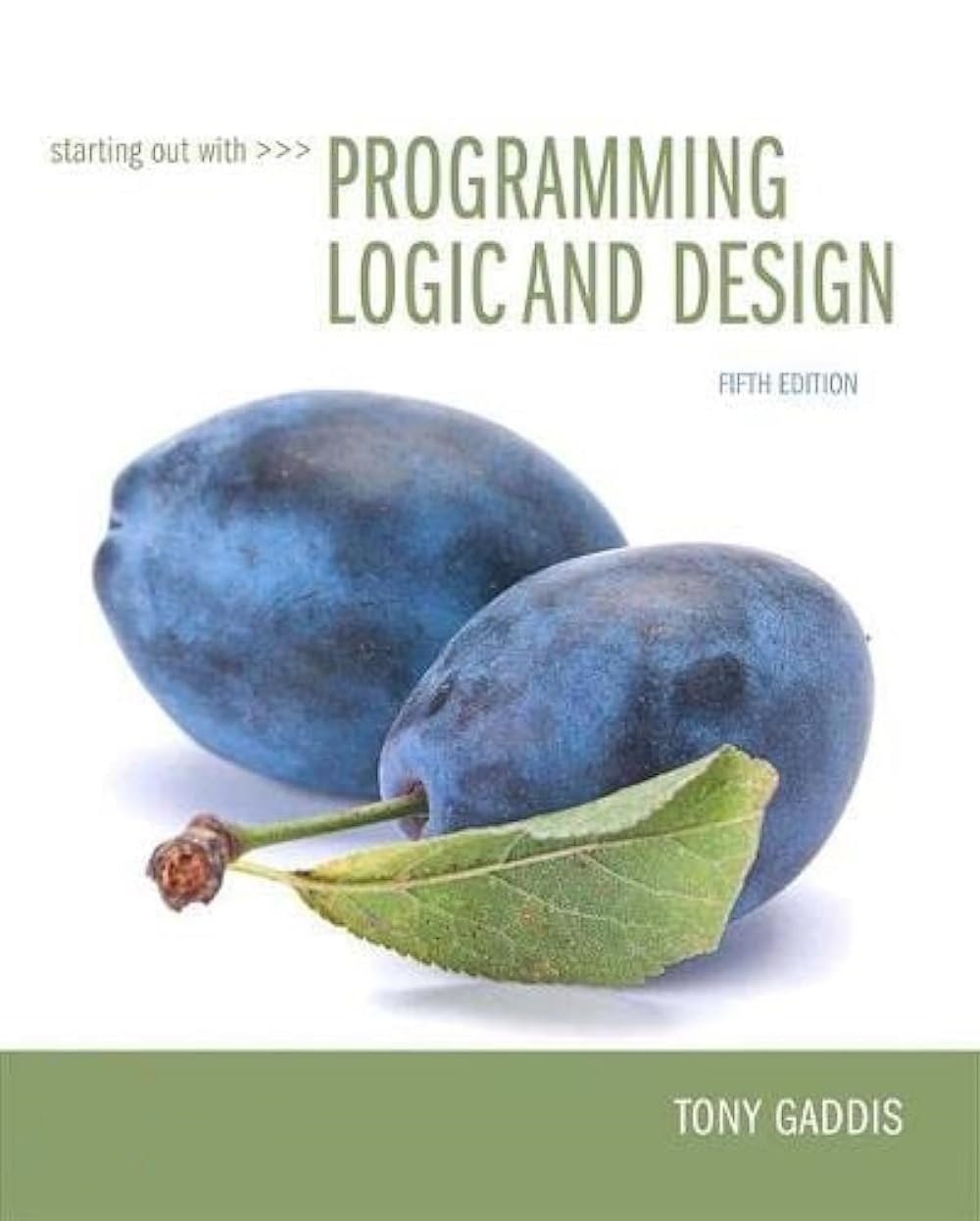
Ever stared at code and wondered, 'How do they even think like that?' If you're new to programming, jumping straight into syntax can feel overwhelming—like trying to run before you walk.
Most intro courses throw you into a specific language right away, but that skips the real foundation: logic. Without understanding how to break problems into steps, plan flows, and design solutions, code becomes a frustrating puzzle. This book changes that by focusing purely on the thinking behind programming, no prior experience required.
Tony Gaddis uses straightforward pseudocode (like English instructions for computers), flowcharts that map out decisions visually, and bite-sized code snippets from today's popular languages like Python or Java. Each chapter builds with complete program examples, updated for relevance, so you see logic in action without drowning in syntax details. It's like having a patient tutor sketching out ideas on a napkin.
Expect relatable scenarios: planning a grade calculator, simulating a bank account, or organizing a simple game. These aren't abstract; they're the exact problems you'll tackle later, making the 'aha' moments stick.
Finish this, and you'll approach your first real coding class with tools already in hand—spotting loops before they're written, debugging in your head, designing efficiently. Students rave about how it demystifies the process, turning intimidation into excitement. It's language-agnostic, so it pairs perfectly with any intro course, whether Java, C++, or web dev.
High schoolers eyeing computer science, college freshmen in logic pre-reqs, career changers dipping toes into tech, or hobbyists building apps. Grab the Kindle edition for instant access—highlight, search, and read on any device. At around 600 pages of clear prose and visuals, it's comprehensive yet digestible, often completed in a semester alongside lectures.
Don't just learn to code; learn to think like a programmer. This is your low-pressure entry point to a skill that powers everything from apps to AI.