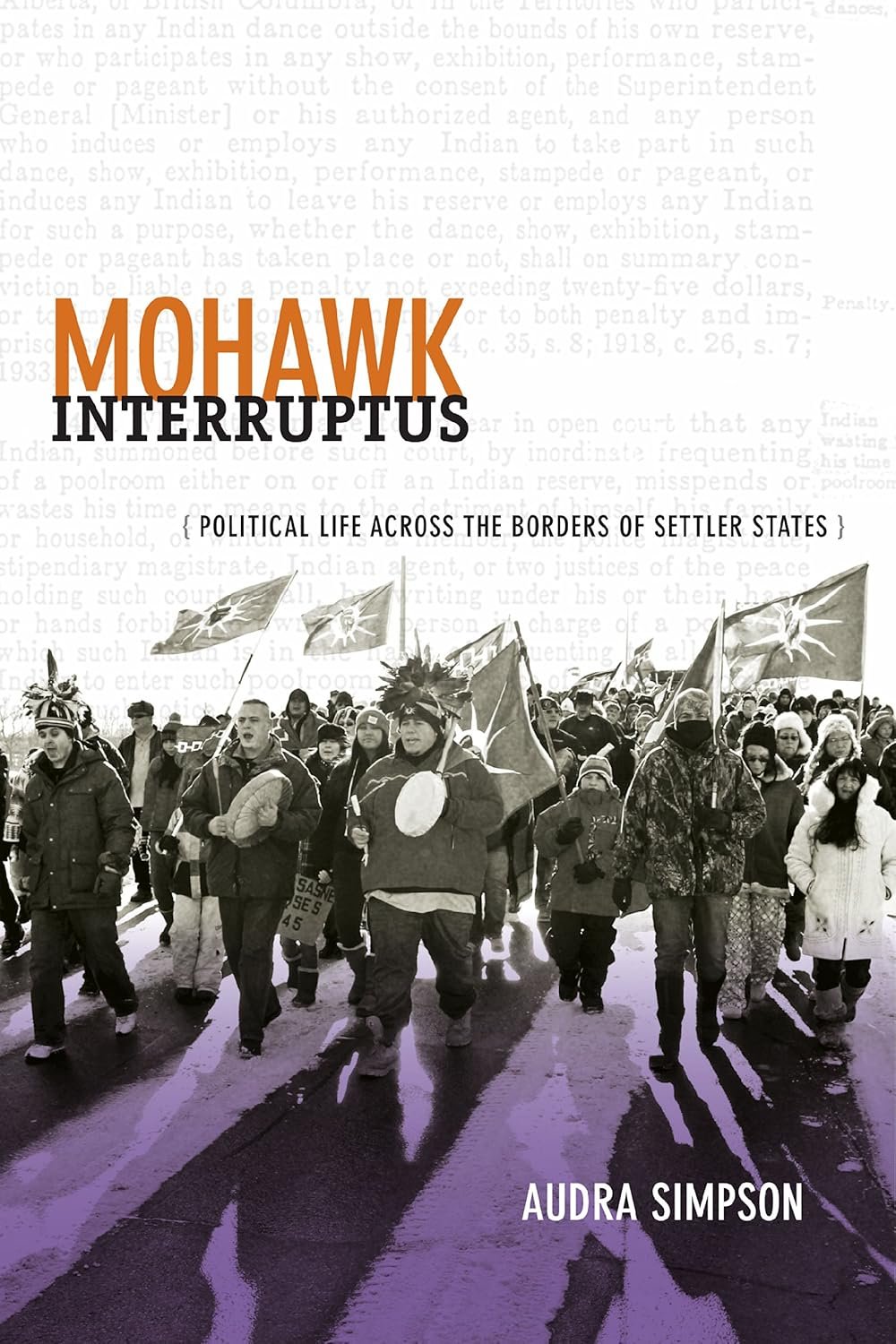
Ever catch yourself wondering how an indigenous nation keeps its political fire alive right in the heart of settler territory? Mohawk Interruptus by Audra Simpson pulls back the curtain on the Kahnawà:ke Mohawks, a reserve community in southwestern Quebec where refusal isn't just rhetoric—it's daily practice.
Audra Simpson, blending razor-sharp political theory with immersive ethnographic research, spotlights how these Mohawks, proud members of the Haudenosaunee (Iroquois) Confederacy, flat-out reject Canadian or American citizenship. They hold firm to their own governance structures, passed down through centuries despite waves of settler colonialism. It's not about invisibility; it's a loud, strategic interruptus against dominant narratives that assume indigenous peoples have been fully integrated.
Simpson traces this refusal from historical roots to modern border crossings—those everyday moments when passports get checked and sovereignty gets tested. She argues that one sovereign order can exist nested within another, creating intense friction over jurisdiction, legitimacy, and identity. You'll feel the weight of these struggles through vivid stories from Kahnawà:ke life.
What sets this book apart? Simpson calls out anthropologists and political scientists for buying into the myth that colonialism is 'done.' Instead, she pushes for tougher, fairer ways to study indigenous politics under settler rule. It's a wake-up call wrapped in academic rigor, making complex ideas accessible without dumbing them down.
Think about the benefits: This isn't dry theory. It reshapes how you see sovereignty, recognition politics, and resistance. Readers walk away with fresh eyes for news on indigenous land rights or border disputes—suddenly, headlines click into place.
Fire up the Kindle edition on your commute and absorb how Mohawks navigate passport controls while upholding confederacy laws. Anthropology students, jot notes for your Native studies paper; political theorists, debate nested sovereignties in your next seminar. Even if you're just curious about decolonization, it sparks conversations at book clubs or over coffee with friends passionate about justice.
At around 400 pages of insight, Mohawk Interruptus delivers tangible tools for grappling with settler colonialism's ongoing reality. Dive in, and you'll see indigenous politics not as a relic, but as a living challenge to the status quo.