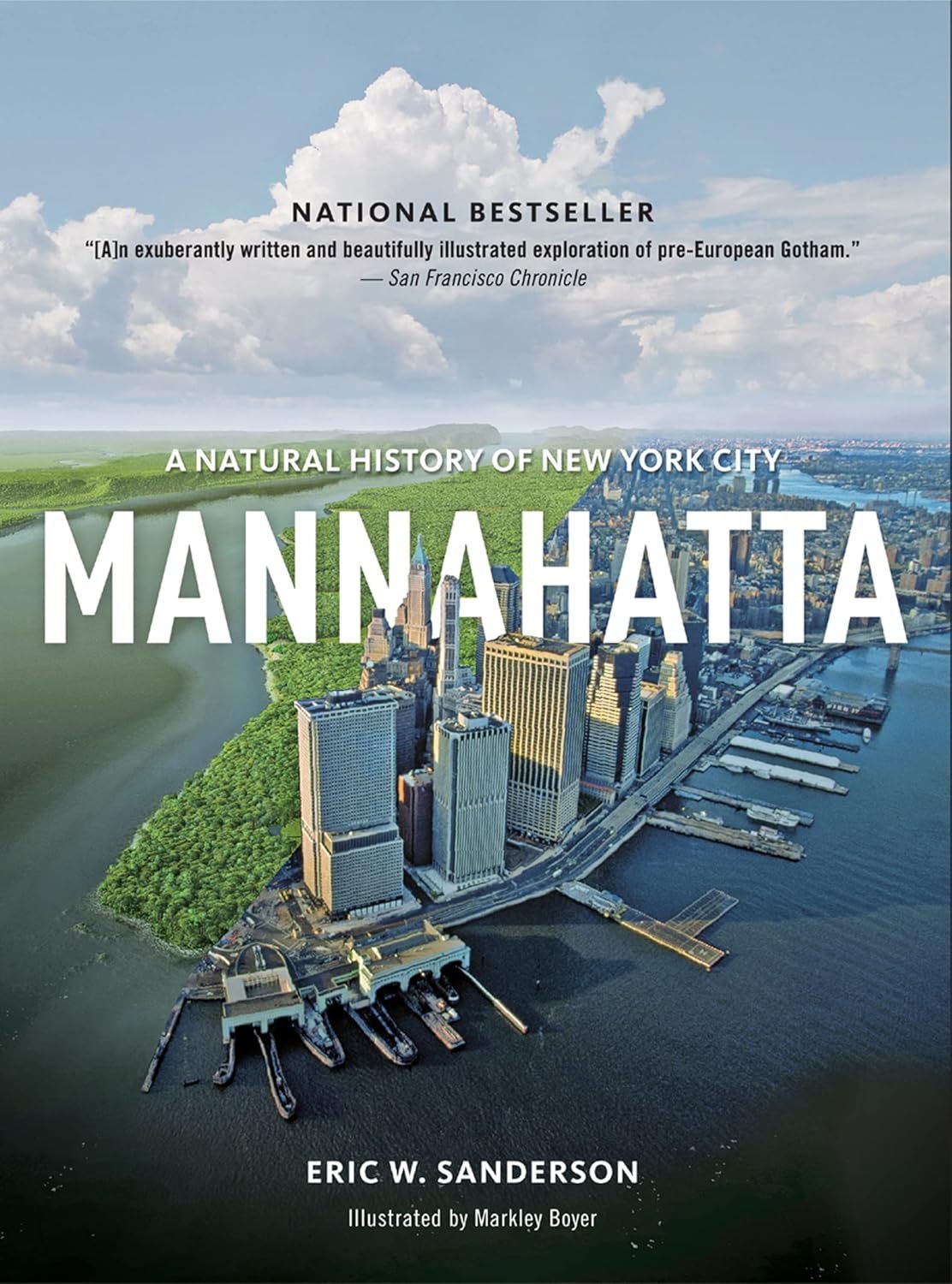
Picture this: you're standing in Times Square, but instead of neon lights and crowds, it's a dense forest teeming with wildlife. That's the magic of Mannahatta: A Natural History of New York City, where landscape ecologist Eric Sanderson resurrects the island as Henry Hudson first saw it in 1609. This Kindle edition isn't just a book—it's a time machine built from eighteenth-century maps overlaid on today's grid, troves of historical documents, and hard scientific analysis.
New Yorkers and visitors alike struggle to envision the wild heart beneath the concrete jungle. Concrete high-rises obscure ancient hills, and pavement smothers former marshes. Sanderson tackles this head-on, recreating the topography, plants, and animals with precision that feels almost tangible. You'll 'see' beavers damming streams in what’s now Midtown and passenger pigeons darkening skies over Central Park's future site.
At its core, the book matches a colonial-era map to modern Manhattan, pinpointing exactly where oak-hickory forests dominated Uptown or salt meadows hugged the Battery. Sanderson's text is lively and approachable, weaving ecology with adventure—think wolves roaming beyond Wall Street amid biodiversity hotspots matching Yellowstone or the Everglades. Breathtaking illustrations bring it alive, turning abstract data into scenes you can almost hear rustling.
Reading Mannahatta shifts your perspective on every walk through the city. Spot a sparrow in Bryant Park? Now you know its ancestors thrived in old-growth woods. It's packed with insights for urban explorers, history enthusiasts, or anyone pondering how humans reshape nature. Critics rave—Publishers Weekly called it 'wise and beautiful,' while The New York Times praised its fact-rich charts and maps.
Grab this on Kindle for instant access, whether you're commuting on the subway or lounging in a park. It's not dry academia; Sanderson's passion makes you feel like you're hiking the island with him. In a city always racing forward, Mannahatta offers a grounding look back, sparking thoughts on restoration and what green spaces we can reclaim today. Dive in and rediscover the wild roots of the world's most famous island.